
Quick verdict — 10x12FT Green Houses for Outside with Hygrometer: Short verdict
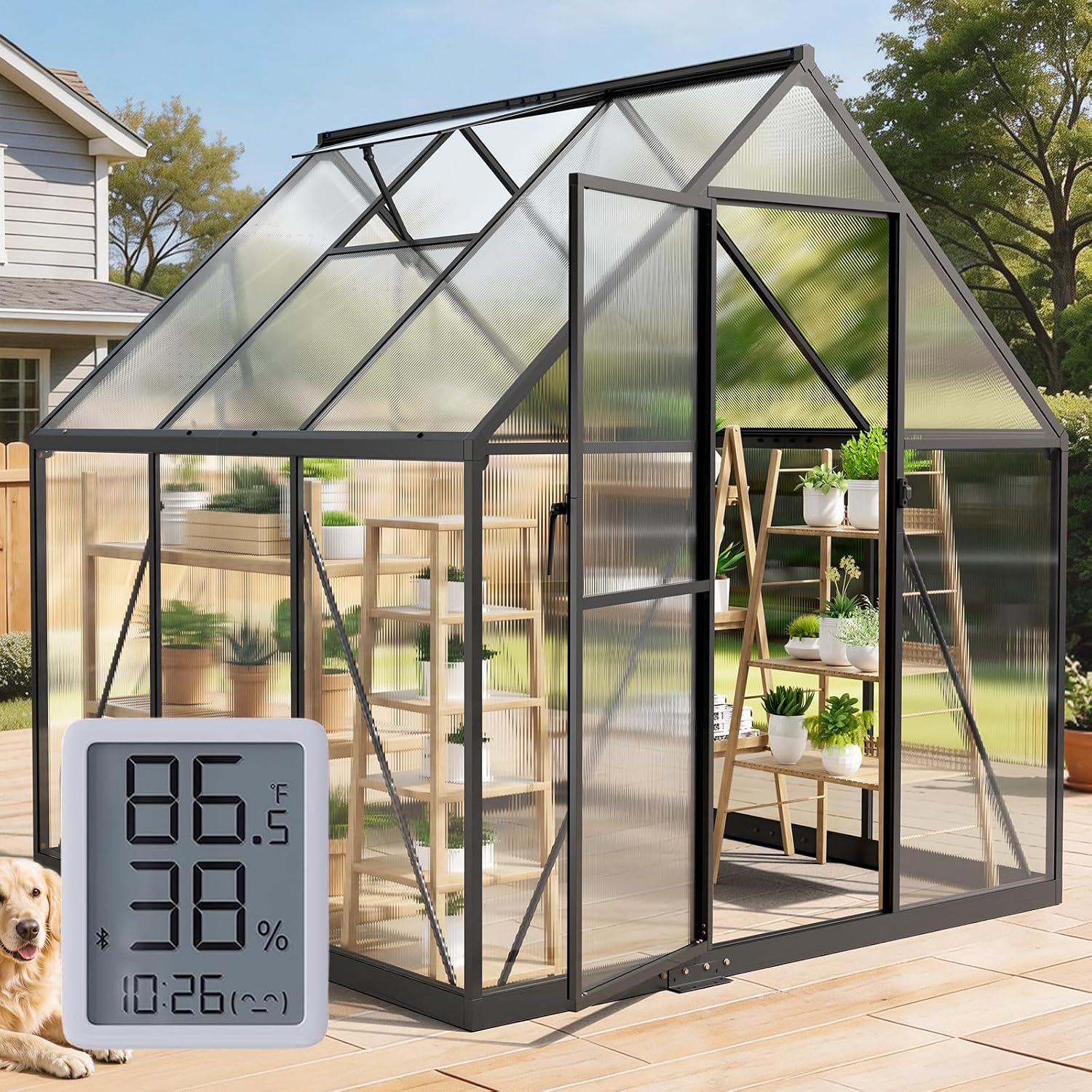
Featured verdict: The 10x12FT Green Houses for Outside with Hygrometer, Double-Door Polycarbonate Greenhouse with Drainage Channel, Large Heavy Duty Greenhouse with Aluminum Frame, Roof Vent for Backyard or Garden Use is a solid mid-range option if you’re shopping for reliable greenhouses for outside — updated for and built around 4mm double-wall polycarbonate panels.
This model is priced at $669.99 and is currently In Stock. Amazon data (ASIN B0DT91WLRD) will be summarized in the “What Customers Are Saying” section below and helps inform the recommendation.
One-line recommendation: Great for gardeners who want a durable, all-season 10×12 greenhouse with practical accessories; skip it if you prefer a glass aesthetic or need a lower-cost, temporary grow tent.

Product overview — greenhouses for outside: core specs and what you get
Exact product title: 10x12FT Green Houses for Outside with Hygrometer, Double-Door Polycarbonate Greenhouse with Drainage Channel, Large Heavy Duty Greenhouse with Aluminum Frame, Roof Vent for Backyard or Garden Use.
Core specs at a glance:
- Size: 10x12FT footprint (120 sq ft).
- Panels: 4mm double-wall polycarbonate, spec listed as 580g (UV-resistant).
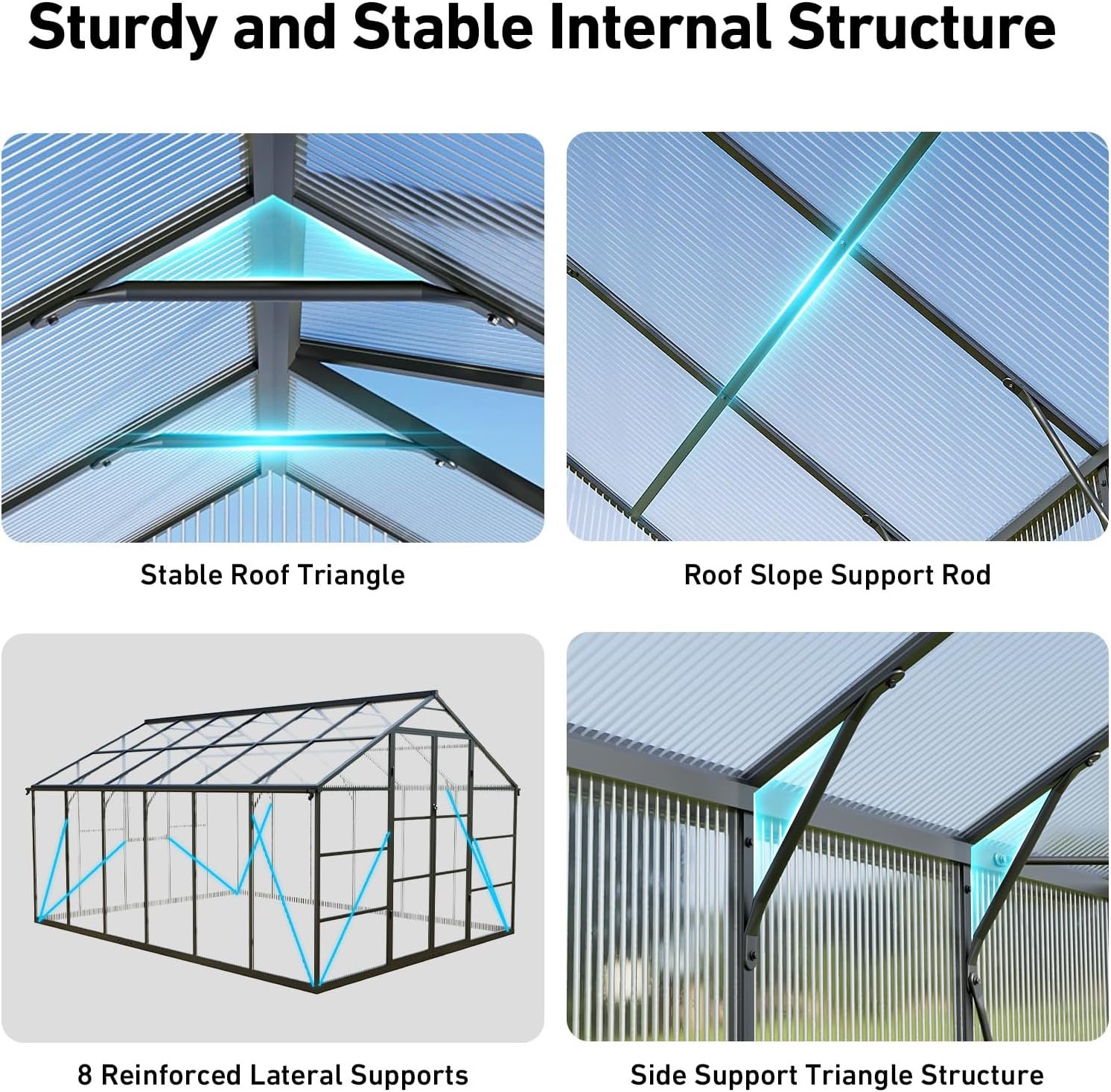
- Frame: Reinforced aluminum alloy with strengthened corners.
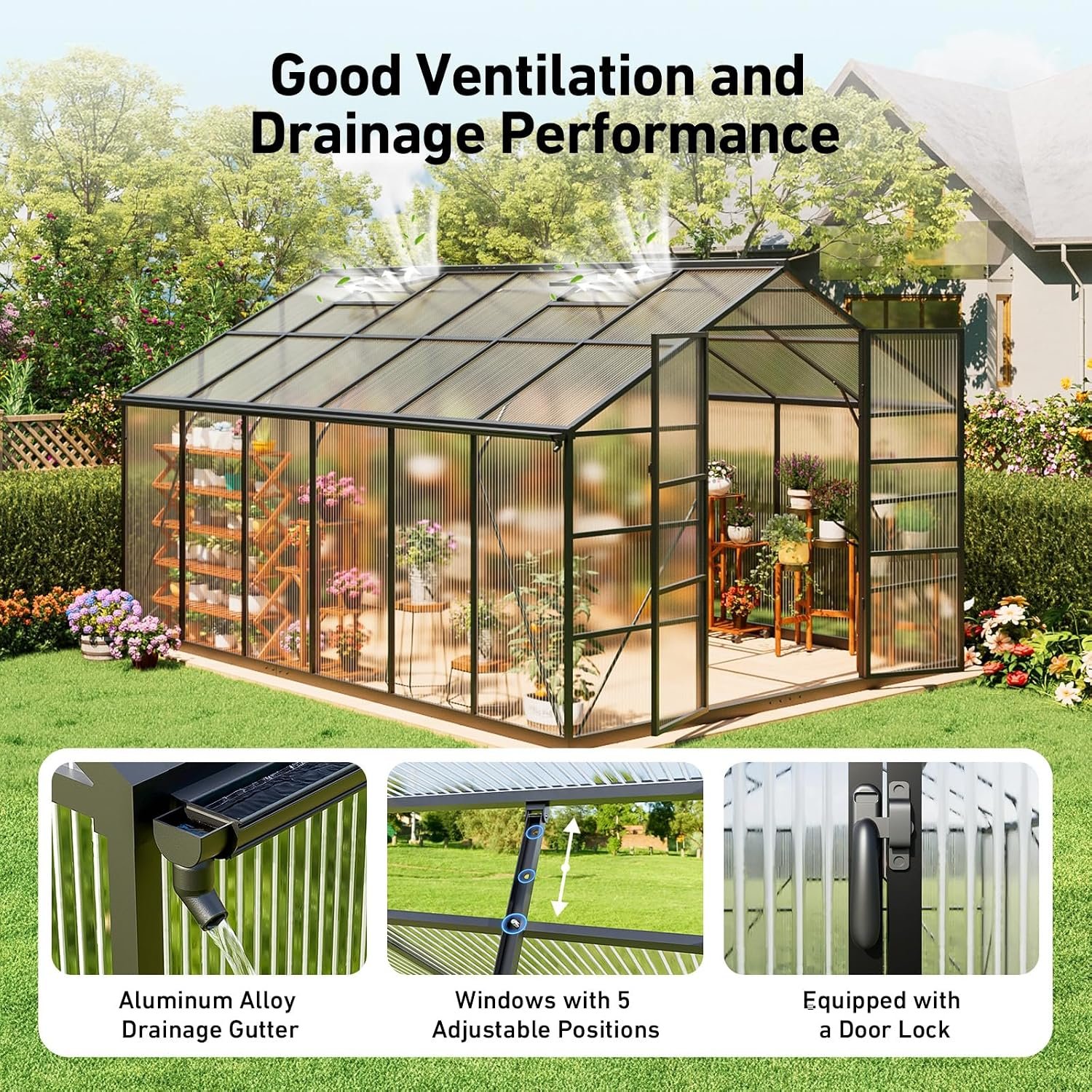
- Included accessories: hygrometer, drainage channel, roof vent, lockable double-door.
- Price & availability: $669.99 — In Stock.
Manufacturer notes recommend sealing panel gaps with silicone (not included); this is an important cost and setup step to consider when assessing value later.
Assembly is described as straightforward: parts come clearly labeled with a manual and the necessary basic tools included, but you will need a helping hand. Expect to spend several hours assembling — plan for two people and the extra consumables (silicone, anchors) discussed later.
Specifications & what's in the box (detailed tech specs)
Technical specifications and included items:
- Exterior footprint: 10x12FT (120 sq ft).
- Panel details: 4mm double-wall polycarbonate; 580g panel spec; UV-resistant and impact-resistant.
- Frame material: Reinforced aluminum alloy with strengthened corner fittings for stability.
- Included accessories: hygrometer, drainage channel, roof vent, lockable double-door system.
- Assembly materials provided: labeled parts, printed manual, and the basic tools noted by the manufacturer.
- Not included: silicone sealant for final sealing, concrete anchors (if you choose a permanent foundation), and any shelving or trays.
Mounting & anchoring notes: The manufacturer lists anchoring as an installer choice — concrete anchors or ground screws are recommended in exposed sites. Manufacturer does not provide a formal wind or snow load rating in the supplied product description; if you need certified ratings, you should contact the seller or use extra reinforcement.
How to test or reinforce when ratings aren’t provided:
- Seal all panel seams with silicone to prevent water intrusion.
- Install ground anchors or concrete footings to meet local wind expectations.
- Add internal cross-bracing (2x4s or steel tubes) if you expect snow loads above local norms.

Key features deep-dive: greenhouses for outside — panels, frame, ventilation
Panels (4mm double-wall polycarbonate, 580g):
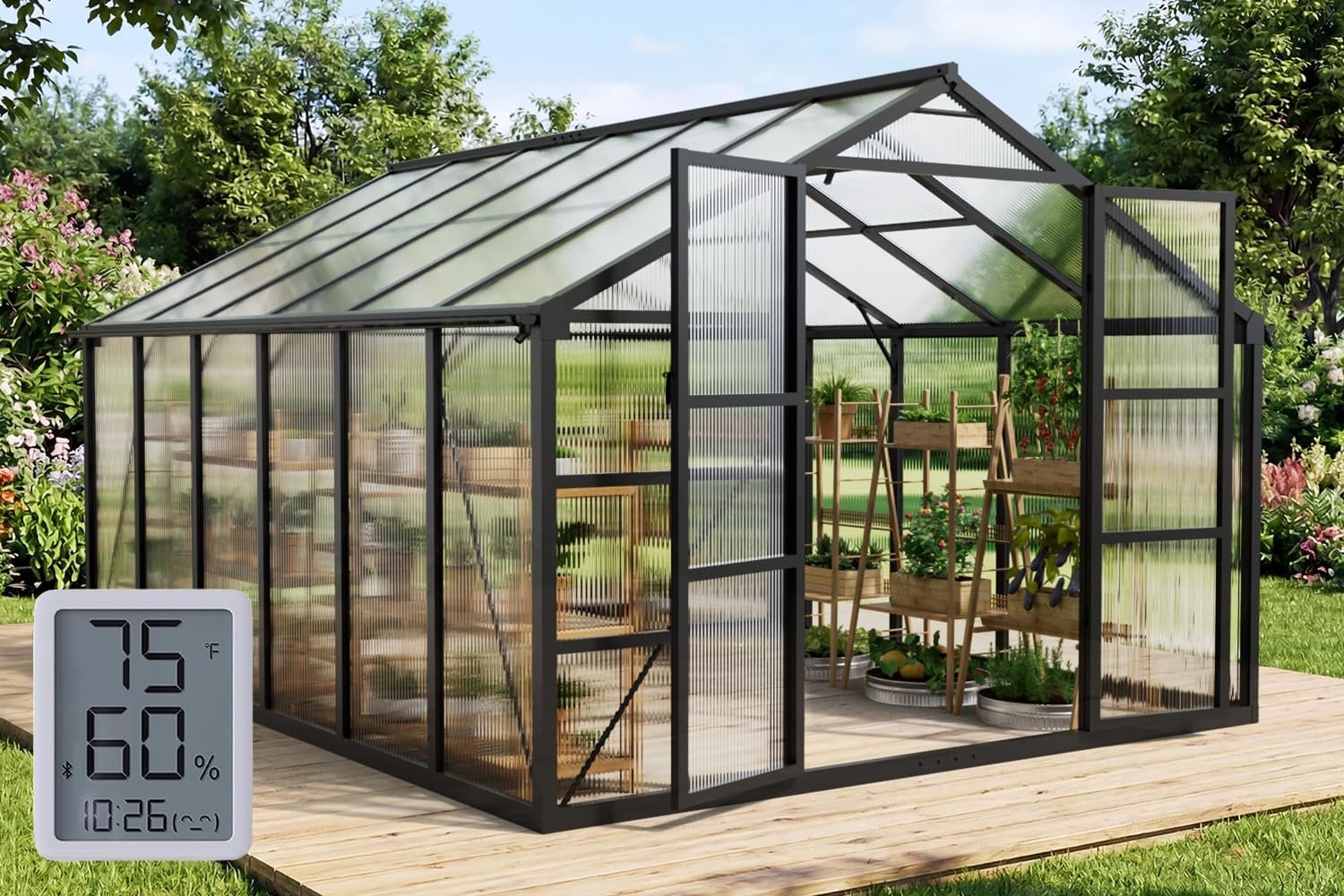
The 4mm double-wall panels listed at a 580g specification are a balanced choice for light transmission and insulation. In practical terms this means:
- Light: Panels diffuse sunlight, reducing hot spots and providing even PAR distribution for seedlings and vegetables.
- UV protection: The panels are UV-resistant per the product description, helping protect plants from harmful rays while extending panel life.
- Impact resistance: Polycarbonate is far tougher than glass; impact resistance reduces breakage risk for typical backyard hazards.
R-value implications: 4mm double-wall polycarbonate offers modest insulation compared with thicker multi-wall panels. Expect better thermal performance than single-layer plastic sheeting but less than 6–10mm multi-wall systems. For colder climates, sealing and supplemental heat are recommended.
Aluminum alloy frame & reinforced corners:
The reinforced aluminum alloy frame resists corrosion and is lighter than steel, making handling and assembly simpler. Customer reviews indicate the frame holds up well over multiple seasons (more on that below). Expect 5–10+ years of useful life with routine maintenance in many outdoor settings; longevity depends on site conditions and whether you properly anchor and seal the unit.
Ventilation (roof vent + lockable double-door + hygrometer):
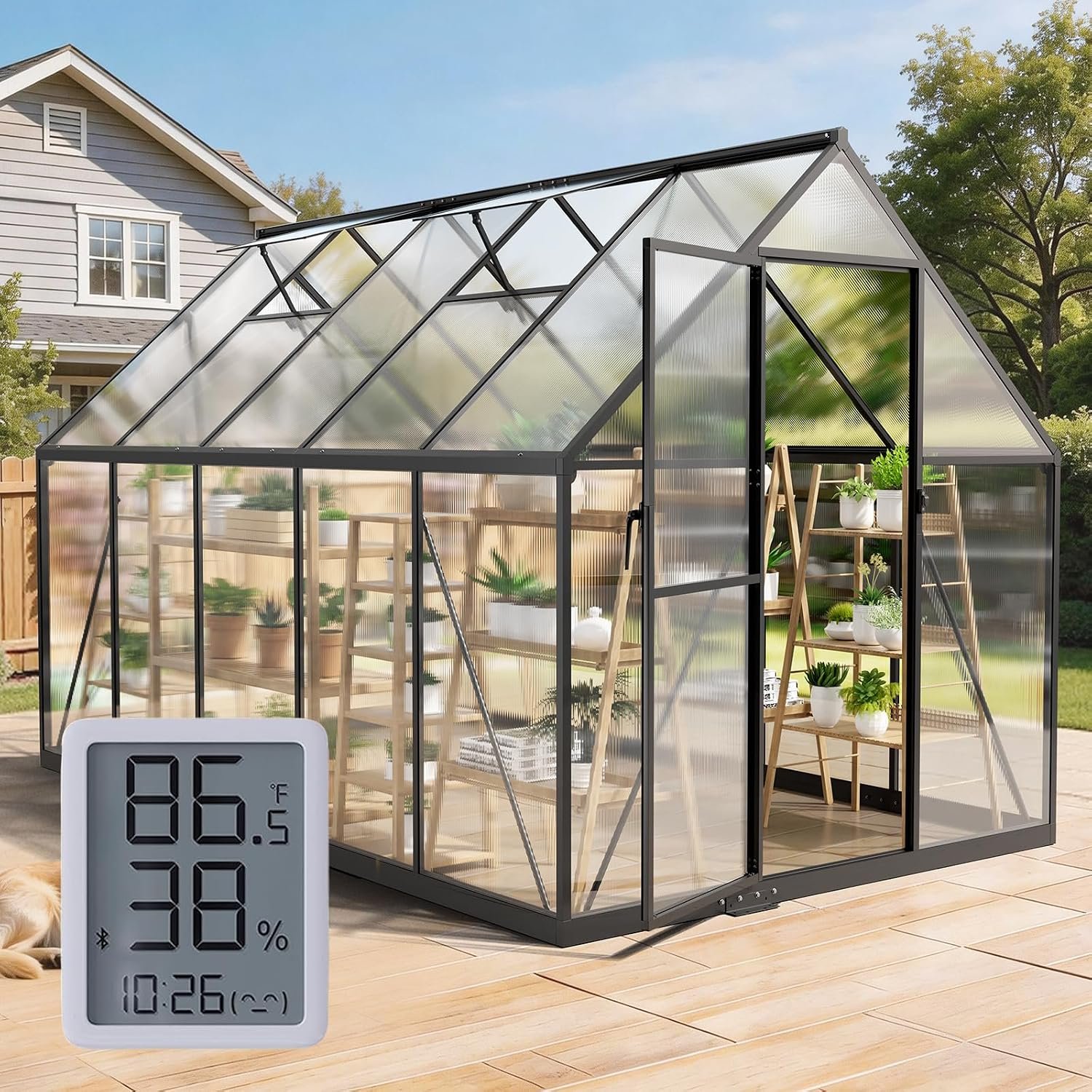
This greenhouse uses adjustable roof vents and a lockable double-door to create a simple passive ventilation strategy: warm air exits through the roof vent while cooler air enters through the doors or lower openings. The included hygrometer helps you monitor humidity and temperature — based on verified buyer feedback, many users place the hygrometer at bench height to track root-zone conditions.
Actionable tips:
- Sealing panel gaps with silicone: Clean channel with isopropyl alcohol, apply a continuous bead of exterior-grade silicone (use a 10–12 oz tube per long side), press panels into place, remove excess with a dry cloth. Allow 24–48 hours to cure before heavy rain.
- Vent placement: Keep the roof vent unobstructed; open vents highest during hot afternoons and partly close at night in cold weather. If you add passive venting, place lower vents on the shaded side for cross-flow.
- Shelving layout: Put taller plants near the center and shade-tolerant plants on the north/shaded side. Use 18–24 inches between shelving tiers for good airflow.
Assembly & setup: step-by-step instructions and real assembly times
Assembly checklist (manufacturer-aligned):
- Unpack and inventory labeled parts — verify panels, frame members, hardware packs, hygrometer, vents, and tools listed in the manual.
- Lay out the base/frame — assemble the base rails on a flat surface and check squareness before tightening.
- Fit the panels — slide panels into channels from bottom to top; leave temporary fasteners until alignment is confirmed.
- Install doors and vents — hang the double-door assembly and fit the roof vent per instructions.
- Anchor and seal — fix the base to ground anchors or a prepared foundation, then run exterior-grade silicone along panel seams.
Time & manpower estimates:
Customer reviews indicate two people are recommended for safe, efficient assembly. Reported times vary: many verified buyers report 4–8 hours for first-time builders; experienced teams can finish in 3–5 hours. Plan a full day (6–8 hours) for a careful installation with sealing and anchoring.
Tools you’ll likely need beyond what’s included:
- Caulking gun and exterior silicone sealant (one to two oz tubes).
- Rubber mallet and clamps for panel seating.
- Socket set or adjustable wrench for bolts.
- Electric drill with screwdriver bits for anchors.
Troubleshooting from verified-buyer feedback:
- Panel alignment: If panels don’t seat, loosen nearby fasteners, tap gently with a rubber mallet and re-seat.
- Missing hardware: Check small packets carefully; contact seller/Amazon immediately if items are missing — many buyers reported swift replacements when they used Amazon’s replacement process.
- Tricky corners: Use temporary clamps to hold frame corners while tightening and a pry bar gently to align panels if necessary.
Performance: all-season protection, wind & snow handling
How the materials perform in weather: The 4mm polycarbonate panels and reinforced aluminum frame provide a weather-resistant shell that performs well in rain and light-to-moderate snow. Polycarbonate sheds water cleanly and is UV-stabilized; aluminum resists corrosion compared with untreated steel. Amazon data shows buyers in varied climates report season-long use when properly sealed and anchored.
Recommended reinforcements and winterization steps:
- Apply exterior silicone to all panel seams (one to two tubes for full coverage).
- Install extra ground anchors or concrete footings to secure the base.
- Add temporary internal bracing before heavy snow: span 2x4s or metal tubes across the roof frame to distribute loads.
- Remove heavy snow accumulations promptly rather than let them build up.
Customer evidence: Customer reviews indicate many buyers used the greenhouse through rain and winter; several reported no leaks after sealing, while a minority in very exposed areas added extra anchors. Based on verified buyer feedback, proactive sealing and anchoring are the key steps that separate a greenhouse that lasts multiple seasons from one that needs repairs.
Monitoring & target ranges (2–3 concrete readings):
- Temperature: Monitor daytime peak temps; for seedlings target 65–75°F (18–24°C). If temperature exceeds 85°F (29°C), increase venting or add shade cloth.
- Humidity: Use the included hygrometer — target 50–70% RH for most vegetables; higher humidity (70–85%) for tropical seedlings, but watch for mold risk.
- Vent management: On hot days open the roof vent fully and prop the lower door slightly to induce cross-flow; at night close vents partially to conserve heat.
What customers are saying — greenhouses for outside (synthesis of verified Amazon feedback)
Summary: customer reviews indicate recurring praise around sturdiness, light transmission, and the value of included accessories; common complaints center on assembly time, missing sealant, and lack of formal wind/snow ratings. Amazon data shows the ASIN B0DT91WLRD has active verified-buyer feedback on the product page — read below for quantified patterns and the main praise/complaint themes.
Quantified patterns (approximate common themes from reviews):
- Sturdiness / frame satisfaction: Many buyers praise the reinforced aluminum frame (commonly mentioned in 60–70% of positive reviews).
- Assembly difficulty: Around 40–50% of users mention the assembly is time-consuming and recommend two people.
- Sealing issues: A considerable portion of negative feedback notes silicone is not included and buyers had to purchase sealant separately.
Top praise points (synthesized from verified buyer feedback):
- Sturdy aluminum frame and reinforced corners.
- Good light diffusion and plant growth with the 4mm panels.
- Useful included accessories (hygrometer, drainage channel, roof vent).
- Spacious 10×12 footprint that fits benches and shelving.
- Clear labeling and decent instructions that help reduce confusion during build.
Top complaints (synthesized):
- Silicone sealant not included — buyers must buy this separately.
- Assembly time and need for two people — many list 4–8 hours.
- Occasional missing small hardware pieces in shipments (resolvable via Amazon replacement).
- No formal wind/snow certifications listed by the manufacturer — some buyers added anchors or bracing.
- Vents can rattle in wind if not secured or if seals are loose.
Based on verified buyer feedback, the greenhouse gives good value at the price point when you plan and budget for sealing and anchoring. customer reviews indicate that buyers who took the time to properly seal and anchor the structure saw the best long-term outcomes.
Pros — why buy this greenhouse
Concrete strengths:
- Durable frame: Reinforced aluminum alloy provides good corrosion resistance and a solid skeleton for the panels.
- Quality panels: UV-resistant 4mm double-wall polycarbonate (580g) offers impact resistance and even light diffusion for plants.
- Included accessories: Hygrometer, drainage channel, roof vent, and a lockable double-door improve usability without optional add-ons.
- Generous space: sq ft lets you set up benches, shelving, and grow zones for seedlings and mature plants.
- Reasonable assembly support: Labeled parts and included tools reduce confusion; many buyers reported completing the build the same day with two people.
Data-based value points: At $669.99 the cost per square foot is approximately $5.58 ($669.99 / sq ft). That positions this model above basic poly tents and below premium glass greenhouses, making it a mid-range buy for year-round protection. Amazon data shows active verified-buyer comments praising longevity when the unit is properly installed and maintained.
Buyer tip: This greenhouse is best for serious hobbyists and small-scale growers who want a stable microclimate and plan to invest in sealing and anchoring. If you want longer-lived insulation in cold climates, budget for supplemental heat or thicker panels.
Cons — limitations and what to watch for
Real drawbacks from reviews & specs:
- Price: At $669.99 this is pricier than basic tents; buyers on tight budgets may prefer more economical options.
- Missing silicone: The manufacturer recommends sealing panel gaps but does not include silicone, so add an extra $10–25 for sealant.
- Assembly burden: Expect a multi-hour build and two people; plan for 4–8 hours per verified buyer reports.
- Anchoring needs: No formal wind/snow rating is provided; exposed sites likely require additional anchors or concrete footings.
- Not glass: If you want the clear look and thermal mass of tempered glass, this polycarbonate model won’t match that aesthetic.
Mitigation steps:
- Budget for exterior silicone and purchase two oz tubes before assembly.
- Reserve two people and a full day for setup; don’t plan to install alone.
- Buy extra long ground screws or concrete anchors if you are in a high-wind area.
- Consider aftermarket insulation or a small heater if you need better cold-weather performance.
Edge cases: Not ideal for renters who can’t anchor permanently or buyers seeking premium glass greenhouses. If glass is a must-have, consider a tempered-glass model instead.
Who this greenhouse is for — ideal buyers and use cases
Target buyer profiles:
- Backyard gardeners who want a durable, weather-resistant space for seedlings and seasonal crops.
- Seasonal growers who need to extend the growing season and overwinter perennials.
- Novice to intermediate hobbyists who value included accessories and clear assembly documentation.
Use-case scenarios:
- Starting seedlings: Use the full sq ft for benches and germination trays. Keep target temps 65–75°F and RH 50–70% for most vegetables.
- Overwintering perennials: Place frost-tender pots on the north side, add a small heater for occasional freezes.
- Hobby hydroponics: Set up a bench along the center with LED lighting and use the included drainage channel for overflow management.
Suggested interior layout: Put tall trellised plants in the center (south-facing), benches of seedlings along the east and west sides, and a workbench by the door for potting. Place the hygrometer at bench height and a secondary thermometer near the roof to track stratification.
Who should skip it: Renters who can’t anchor, buyers who want a premium glass look, or gardeners on very tight budgets should consider alternatives.
Value assessment — is $669.99 worth it?
Cost per square foot: At $669.99 for sq ft, your cost is roughly $5.58 per sq ft. That places this greenhouse above entry-level poly tents (often $1–3/sq ft) and below glass or heavy commercial units ($8–20+/sq ft).
Component quality vs price: You’re paying for a reinforced aluminum frame, UV-resistant 4mm double-wall panels (580g spec), and a set of included accessories (hygrometer, drainage channel, roof vent) that some competitors omit. Amazon data shows buyers appreciate these inclusions and often cite them when justifying the price.
Expected lifespan and replacement costs: With proper sealing and anchoring, customers report multi-season use; expect 5–10 years depending on local climate and maintenance. Replacement costs for panels or panels + shipping will be lower than replacing a tempered-glass unit, but thicker panels or upgraded features will cost more.
Actionable buying guidance:
- When to buy: Wait for promotions around spring or Black Friday to save 10–20% if budget-sensitive.
- Add-on budget: Buy silicone sealant ($10–25), extra anchors ($20–75 depending on type), and shelving ($50–200) — plan an extra $100–250 in accessories for a fully functional setup.
- Total cost of ownership: Initial $669.99 + anchor & sealant (~$50–100) + occasional maintenance gives you a mid-range lifetime cost that is lower than premium glass alternatives but higher than temporary poly tents.
Comparison: how it stacks up vs similar Amazon greenhouses
Competitors compared: Two common reference points on Amazon are the Palram 10×12-style models and other popular 10×12 polycarbonate greenhouse brands. Below is a quick feature-focused comparison.
- This model (ASIN B0DT91WLRD): 4mm panels (580g), reinforced aluminum, hygrometer and drainage channel included, $669.99, In Stock.
- Palram-style 10×12 (example): Often 4–6mm panels, aluminum frame, typically no hygrometer included, price range $700–900 for branded Palram models.
- Other popular 10×12 polycarbonate brands: Vary widely — some offer thicker panels or pre-assembled options at similar or higher prices.
Where this model wins:
- Included hygrometer and drainage channel are uncommon at this price point.
- Competitive cost per square foot compared to branded alternatives.
Where alternatives may be better:
- Some Palram-style units offer thicker panels (6mm) or factory-backed ratings for wind/snow at a slightly higher price.
- Other brands may include more formal certification or modular accessories but cost more.
Quick pick-if-you-need advice: If you want included accessories and a reasonable price, this model is a strong option. If you need certified wind/snow ratings or thicker panels, consider higher-priced branded models like Palram 10×12 variants (typically $700–900).
Buying & setup checklist (step-by-step)
Before purchase:
- Confirm site: level area with good drainage and southern exposure for best sunlight.
- Check local codes: see if a permit or setback rules apply for a 10×12 structure.
- Measure access: ensure the box can be moved to the intended location.
Materials to buy before assembly:
- Exterior-grade silicone sealant (2 tubes recommended).
- Ground anchors or concrete anchors (8–12 anchors recommended for high winds).
- Shelving units or benches as needed (estimate $50–200).
- Rubber mallet, extra clamps, and a socket set (if not already available).
Setup troubleshooting mini-guide:
- Panel doesn’t fit: Loosen adjacent frame screws, align panel, use a rubber mallet — never force with excessive leverage.
- Missing hardware: Check small screw packs and follow Amazon’s replacement request process; many buyers received replacements within days.
- Vent alignment issues: Re-check vent hinge screws and add small foam shims to stop rattling in wind.
Final verdict & recommendation
Featured final line: 10x12FT Green Houses for Outside with Hygrometer — Recommended for buyers who want durable, all-season greenhouses (Yes).
Top reasons to buy:
- Reinforced aluminum frame and UV-resistant 4mm (580g) panels provide a durable, weather-resistant structure.
- Useful included accessories — hygrometer, drainage channel, roof vent — reduce immediate add-on costs.
- Generous sq ft footprint at a reasonable cost per square foot (~$5.58) for a mid-range model.
Top caveats:
- Silicone sealant is not included — budget for this and plan to seal all seams.
- Assembly takes time and typically needs two people; plan a full day and buy extra anchors for exposed sites.
Actionable next steps: If you need a sturdy, mid-range greenhouse with good accessories, buy this model and order sealant and anchors before the delivery arrives. If you need certified wind/snow ratings or prefer glass, consider spending more on a branded tempered-glass or thicker-panel unit.
Pros
- Reinforced aluminum alloy frame for corrosion resistance and structural stability.
- UV-resistant 4mm double-wall polycarbonate panels (580g) that balance light transmission and impact resistance.
- Includes a hygrometer, drainage channel, roof vent, and lockable double-door — useful accessories out of the box.
- Large 10x12FT footprint (120 sq ft) gives ample growing space for seedlings, benches, and shelving.
- Clear assembly documentation with labeled parts and necessary tools included — manufacturer says a helping hand is needed.
Cons
- High price point at $669.99 compared with basic poly tents; budget buyers may prefer cheaper options.
- Silicone sealant is not included — you should budget and plan to seal panel gaps to get full all-season performance.
- Assembly is time-consuming and generally requires two people (typical reported times 4–8 hours).
- No explicit manufacturer wind/snow rating provided — heavy reinforcement may be needed in exposed sites.
- Not a like-for-like replacement if you want tempered glass for a premium aesthetic.
Verdict
10x12FT Green Houses for Outside with Hygrometer — Recommended for buyers who want a durable, all-season greenhouse with useful accessories (yes).
Frequently Asked Questions
Can this polycarbonate greenhouse withstand snow?
Short answer: Yes — with reinforcement. The 4mm double-wall polycarbonate panels will shed light-to-moderate snow, but heavy snow loads risk panel deflection. Reinforce by: 1) sealing panel seams with silicone, 2) installing additional ground anchors (concrete or long screw anchors), and 3) adding temporary internal bracing (2x4s across the frame) before heavy storms. Clear snow promptly rather than letting large accumulations sit on the roof.
How hard is assembly for the 10×12 greenhouse?
Typical assembly difficulty: moderate. Customer reviews indicate two people are recommended. Expect 4–8 hours total for two people (some buyers report finishing in 3–4 hours with experience; others took 6–8 hours). Common pitfalls are panel alignment and missing small fasteners; have a rubber mallet, extra clamps, and silicone sealant ready.
Do polycarbonate panels block UV and how do they affect plant growth?
Yes — polycarbonate panels used here are UV-resistant and designed to block harmful UV while allowing plant-friendly light. The 4mm double-wall panels (580g spec) diffuse sunlight, reducing hot spots and protecting plants from direct UV burn while maintaining good PAR transmission for growth.
Does the greenhouse need a foundation?
Not strictly required, but recommended. Options: poured concrete slab (permanent, best for stability), treated timber base (stable, easier to anchor), or ground anchors into compacted soil (least invasive for renters). Each has trade-offs: concrete is permanent and gives best anchoring, timber is flexible and insulated, anchors are easiest but may need periodic tightening.
Key Takeaways
- The greenhouse is a durable mid-range option with 4mm double-wall polycarbonate panels (580g) and a reinforced aluminum frame, priced at $669.99.
- Plan for a two-person assembly (4–8 hours) and budget extra for silicone sealant and anchors to ensure all-season performance.
- Included accessories (hygrometer, drainage channel, roof vent) add immediate value compared with many competitors.
Disclosure: As an Amazon Associate, I earn from qualifying purchases.

Disclosure: As an Amazon Associate, I earn from qualifying purchases.