
Product Overview: What This Polycarbonate Greenhouse Offers
You want a walk-in polycarbonate greenhouse that protects plants from cold snaps, wind, and cramped access without feeling like a temporary plastic tent. This Vigo huseeo-style outdoor greenhouse, based on the listing description, is aimed at gardeners who want a more permanent-looking garden structure rather than a quick seasonal cover. The catch is important: the listing shows $0.00 and is marked currently unavailable, so its value can’t be judged until a real selling price returns.
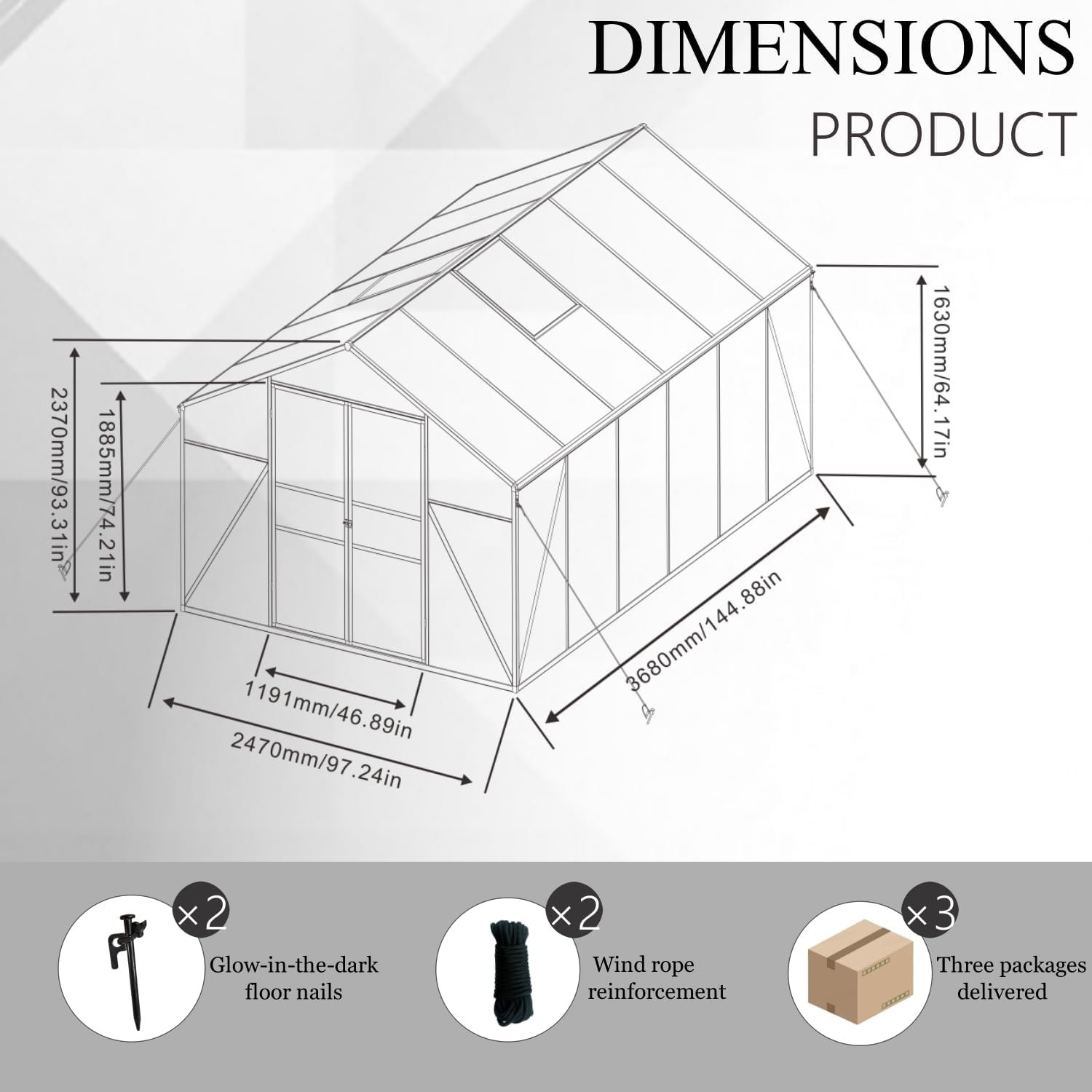
The listed build is substantial on paper: an 8.2 * 12.2 * 7.8FT footprint, a 92in high design, a black aluminum frame, polycarbonate panels, a roof vent, a raised door, lockable access, plus windproof rope and ground nails. Those details put it closer to a semi-permanent backyard growing room than a lightweight plastic tunnel.
For shoppers, the practical question is not simply whether the concept is appealing. It is. The real decision is whether you should wait for this polycarbonate greenhouse to come back with a live price and buyer history, or choose an in-stock alternative with clearer proof of assembly quality, support, and storm performance.
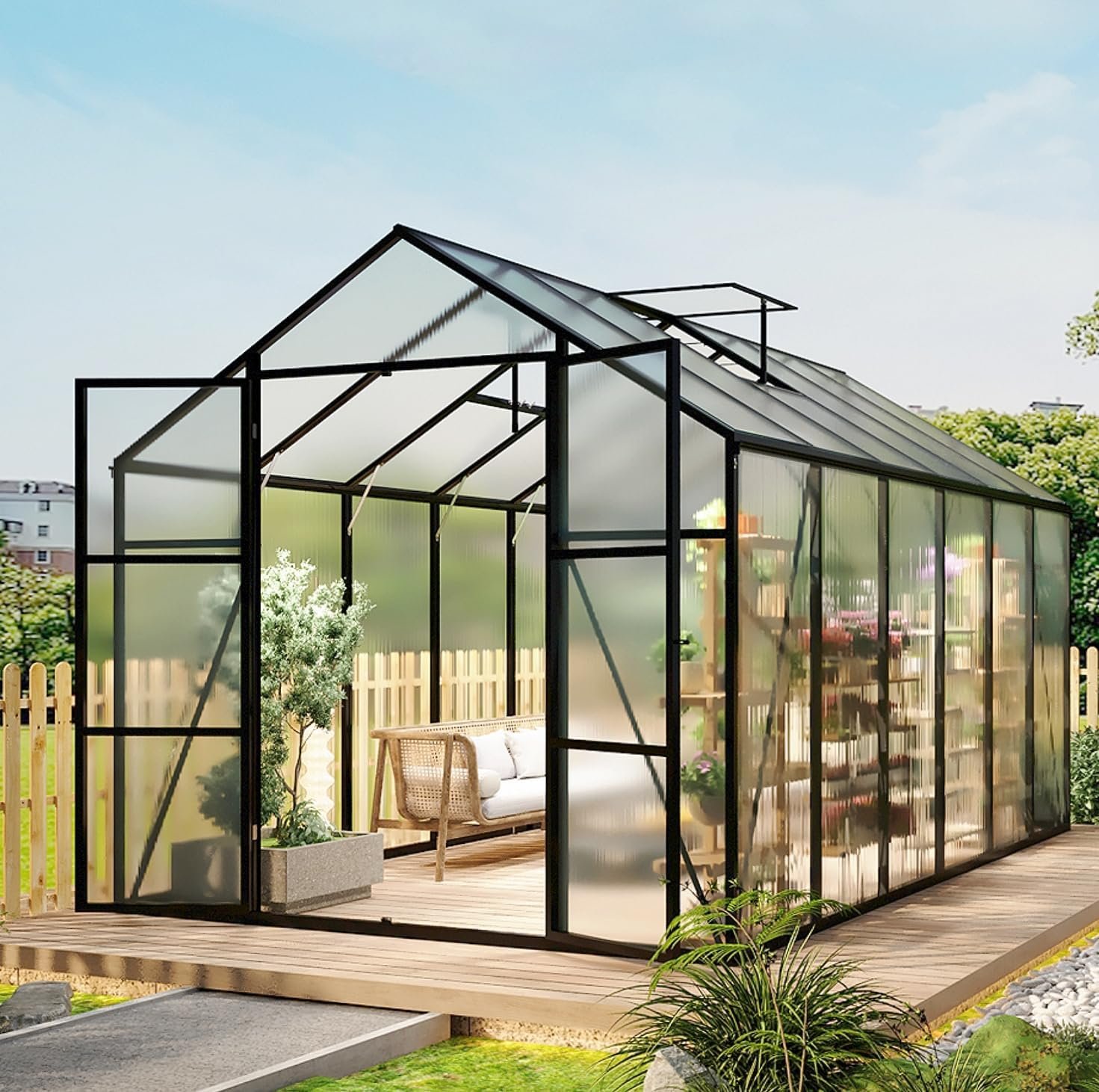

Design, Size, and Walk-In Usability
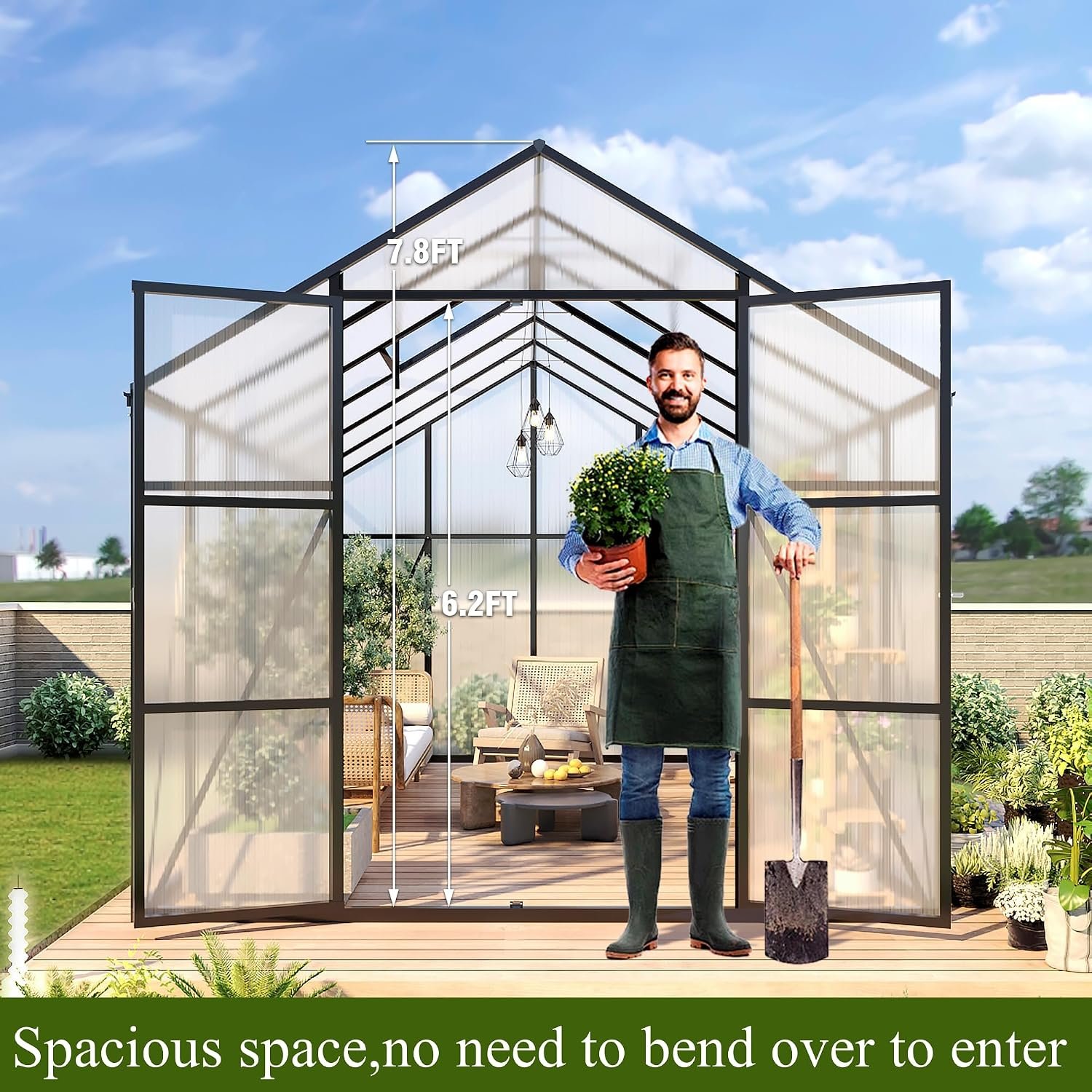
The biggest everyday advantage here is comfort. A raised entry and tall interior make the greenhouse easier to use when you’re carrying a watering can, moving trays, pruning tall plants, or shifting pots around. If you’ve used a low tunnel or compact shelf-style cover before, you already know how quickly bending, ducking, and squeezing past foliage can make routine plant care feel like a chore.
The walk-in layout should suit gardeners who want room for shelving, seed trays, grow bags, and container plants in the same protected space. That matters if you start vegetables early, hold plants between seasons, or need a tidy place to group herbs and tender ornamentals. The black finish also gives the structure a cleaner garden look than the bright silver utility-frame style seen on many greenhouse kits.
Before you buy any large aluminum sunroom-style greenhouse, plan the location physically rather than guessing from a product photo. Use stakes, string, or outdoor tape to mark the footprint in your yard. Then stand where the entrance will be and confirm that you can open the door without hitting a fence, raised bed, patio furniture, or nearby shrubs.
Choose a sun-rich position, ideally one that gets strong light through the main growing part of the day. Avoid low spots where roof runoff or lawn drainage collects, because standing water can make the base unstable and raise humidity around the structure. Compared with smaller portable greenhouses, this design offers more working room and a stronger frame feel, but it also demands a more deliberate placement decision because moving it later will not be casual.
Key Feature Breakdown: Wind Protection, Frame, and Panels
The durability story rests on three listing claims: 1200G/㎡ thickened polycarbonate material, an upgraded aluminum frame, and included wind anchoring components. Those are useful claims, but they should be read as product-description promises rather than independent storm-test results. The listing does not provide panel thickness in millimeters, certified wind ratings, snow-load numbers, or third-party structural testing.
For gardeners, polycarbonate generally has several advantages over thin film covers. It lets light through, provides better insulation than single-layer plastic sheeting, and is usually less brittle than glass-style panels when bumped during normal garden use. That makes a polycarbonate greenhouse attractive for seed starting and shoulder-season protection, especially if you want something that feels less disposable than a zippered cover stretched over tubular framing.
The wind package includes rope and nails intended to help secure the structure. If your yard is open, coastal, exposed to field winds, or positioned at the top of a slope, treat those included items as the beginning of your anchoring plan rather than the whole plan. Extra ground anchors, a perimeter base, or heavier fixing points may be worth budgeting for, depending on your site.
Use this wind-readiness sequence during installation:
- Level the base so the frame is not fighting uneven ground from the start.
- Square the frame before panels go in, because misalignment can create gaps and stress points.
- Tighten panel retainers only after the panels are seated properly.
- Install the supplied anchors once the structure is aligned.
- Inspect after the first storm for loose fasteners, shifted panels, or stretched tie points.
The greenhouse is marketed for severe weather, including strong winds and severe cold. That sounds reassuring, but you should still compare the claim with your local wind exposure, snowfall risk, and whether your setup needs a foundation kit or additional anchoring before relying on it for valuable plants.

Ventilation, Security, and Plant Health Features
A closed polycarbonate greenhouse can heat quickly when the sun is strong, even on days that feel mild outdoors. That makes the listed roof vent and ventilation windows more than convenience features; they are part of plant protection. Without airflow, seedlings can stretch, leaves can scorch, and condensation can collect on cool surfaces overnight.
The lockable doors are also useful if you plan to store small tools, fertilizer, seed trays, or sensitive plants inside. A lock will not turn a garden greenhouse into a high-security shed, but it can reduce casual access by children, pets, or passersby. For many homeowners, that is enough to keep the growing area orderly and prevent accidental disturbance.
Seasonal management should be simple but consistent. Open vents during warm afternoons when the sun is pushing internal temperatures up, then close them before cold nights if you are protecting tender plants. Use a small thermometer and humidity monitor if you are raising seedlings or overwintering plants that dislike damp, stagnant air.
Better airflow supports healthier growth because it helps reduce fungal pressure, limits excessive heat buildup, and encourages stronger seedlings when paired with sensible watering. Keep trays spaced so air can move between them, and avoid wetting foliage late in the day when temperatures are about to drop.
The listing does not include automated vent openers, heaters, thermometers, benches, irrigation systems, or shade accessories. If you want tighter temperature and moisture control, plan those additions separately before deciding whether this polycarbonate greenhouse fits your full setup budget.
Assembly and Site Preparation Before Buying
Before you wait for this listing to return, check whether your property is ready for a large greenhouse kit. Confirm that you have usable garden space, acceptable sun exposure, and enough access to carry long frame pieces from the delivery point to the build site. If you live in a neighborhood with HOA rules, local zoning limits, or restrictions on outbuildings, verify those details before ordering.
A stable base is the best way to reduce shifting after installation. Treated timber, pavers, concrete, or a compacted gravel pad can all work depending on your yard and budget. The goal is to create a flat support surface that keeps the frame aligned and gives your anchors something reliable to work with.
Aluminum and polycarbonate kits often reward patience. Panels can flex while you are handling them, especially if the weather turns breezy during assembly. Frame squareness matters because even a small twist can affect panel fit, door alignment, and vent operation. A second person is strongly recommended for safer handling and faster progress.
A practical assembly workflow looks like this:
- Inventory every part before building, including fasteners and small hardware.
- Loosely assemble the frame so adjustments remain possible.
- Square and level the structure before tightening everything down.
- Insert panels carefully and check that edges are fully seated.
- Fit the vent and door hardware only after the main shell is aligned.
- Anchor the greenhouse last once you are satisfied with placement and fit.
The seller promises around-the-clock customer service in the listing. Treat that as a support claim, not a guarantee of outcome. Take photos of the boxes, labels, part bags, panels, and any damage during unpacking, because clear documentation makes missing-part or replacement requests much easier.
What Customers Are Saying
No star rating, review count, or verified-buyer excerpts were included in the supplied product data for this greenhouse. That means it would be misleading to claim that customers praise the build quality, complain about assembly, or report specific storm results. A large outdoor structure is exactly the kind of purchase where real buyer feedback matters, so the absence of public sentiment should be treated as a risk factor.
If the live listing still lacks reviews when it returns, be cautious. With greenhouse kits, the difference between a good product and a frustrating one often shows up during unpacking and installation: panel fit, missing hardware, bent frame pieces, unclear instructions, door alignment, and whether vents operate smoothly after assembly. Those are hard to judge from marketing copy alone.
When reviews become available, sort by most recent first and filter for buyer photos. Assembly images often reveal panel gaps, frame alignment issues, damaged packaging, and how the finished greenhouse looks in a real yard rather than a product render. Pay close attention to comments written after storms, because wind performance is more meaningful after exposure than on day one.
If customer reviews appear later, weigh repeated patterns more heavily than isolated complaints. One damaged box can be a shipping problem; multiple reports of the same missing connector or the same door-fitting issue suggest a product or packaging concern. Look for exact rating numbers and review counts before treating any buyer consensus as reliable.
Who This Outdoor Greenhouse Is Best For
This greenhouse is best suited to gardeners who want a dedicated walk-in growing area for seedlings, vegetables, overwintering containers, and shoulder-season protection. It is not aimed at someone who only needs a small balcony cover or a temporary shelf tent for a few herb pots. If your goal is to create a more organized backyard growing zone, the concept makes sense.
Ideal buyers are homeowners with a level outdoor area, enough patience for a metal-frame kit, and a willingness to anchor the structure carefully. It may also appeal to gardeners in moderately windy or cold regions who want more protection than a fabric cover can offer, provided they are prepared to adapt the installation to local conditions.
There are also shoppers who should pause. Renters may not want the commitment of a semi-permanent garden structure. Buyers who need immediate delivery cannot rely on an unavailable listing. Anyone without installation help should think carefully, because large panels and frame sections can be awkward to manage alone.
Useful plant scenarios include starting spring vegetables, extending tomato or pepper seasons, sheltering herbs during shoulder months, protecting potted citrus in mild winters, or creating a tidy workspace for potting and propagation. If your top priority is proven buyer feedback and a live price, wait for the listing to return with those details or compare currently available polycarbonate greenhouse models instead.
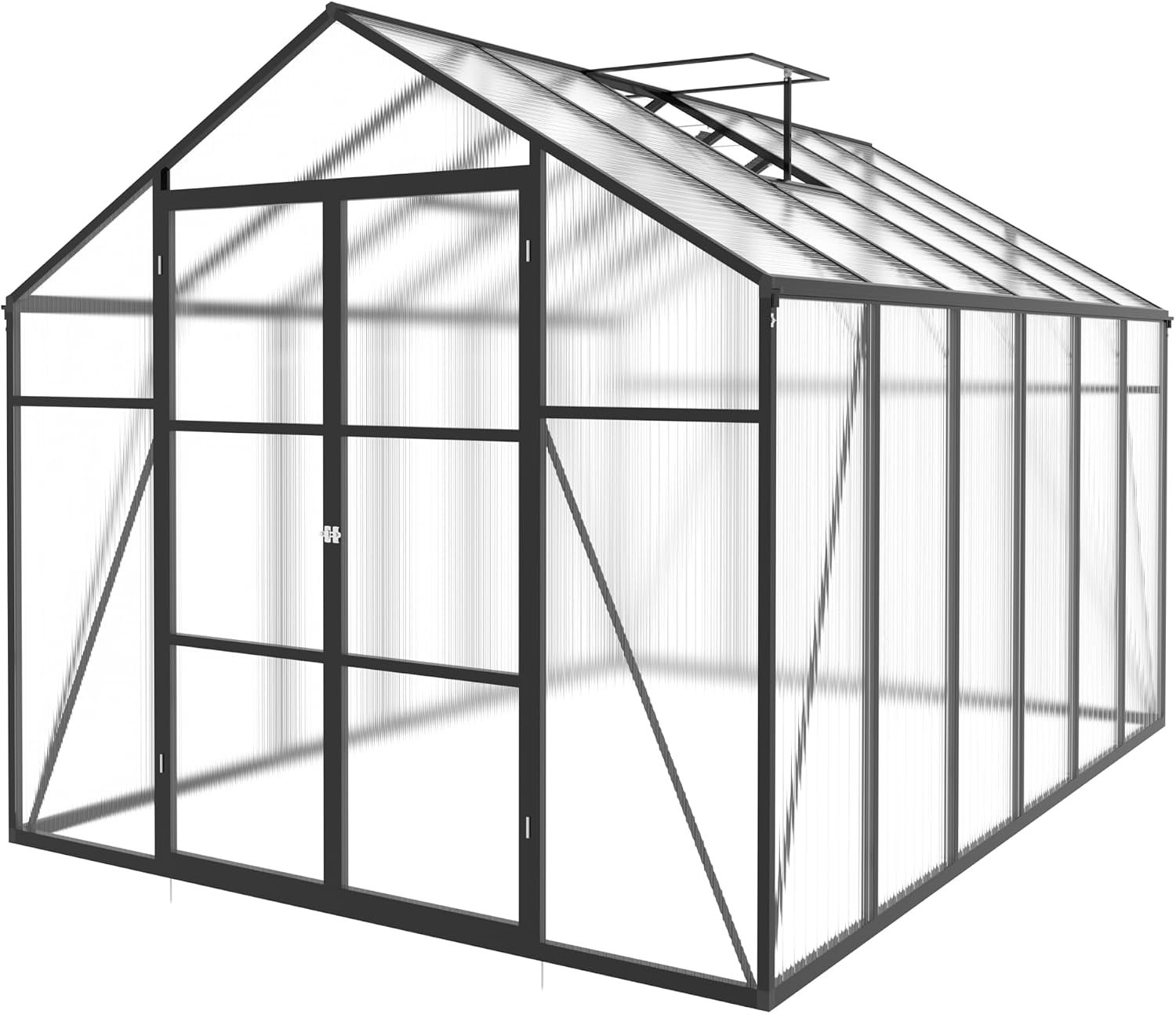
Value Assessment: Price, Availability, and Buying Timing
The current listing status is the biggest value limitation: it is currently unavailable and shows $0.00. That figure should not be treated as a sale price, a discount, or a free offer. It is simply the displayed unavailable-listing price from the provided product data, and shoppers cannot judge real value until a final selling price and delivery estimate appear.
The value case would become stronger if the returning listing combines a competitive live price with the included anchoring hardware, ventilation features, lockable access, polycarbonate construction, and a roomy walk-in format in one package. Those elements can reduce the number of separate purchases you need to make, though accessories and site materials may still add to your total project cost.
When it comes back in stock, check the following before purchasing:
- Final $ price shown at checkout, not only on the product page.
- Shipping cost and whether oversized delivery adds fees.
- Return window, especially for opened large kits.
- Warranty or support terms stated by the seller or manufacturer.
- Replacement-panel availability in case of future damage.
- Installation hardware completeness based on current listing contents.
Set a target budget by comparing similar aluminum polycarbonate greenhouse models with a comparable footprint before committing. If this product returns at a much higher delivered price than available alternatives, the included features may not be enough to offset the lack of established buyer feedback.
How It Compares With Other Amazon Greenhouses
If this Vigo huseeo listing remains unavailable, you will likely compare it with names such as Palram – Canopia Hybrid Greenhouse and YITAHOME Polycarbonate Greenhouse. Those alternatives often appear in the same shopping category, but you should compare them by current live specifications rather than assuming one is automatically better.
The reviewed greenhouse emphasizes a raised walk-in design, wind anchoring components, lockable doors, ventilation windows, and a roof vent. Palram – Canopia is often considered by buyers who want an established greenhouse brand, while YITAHOME models may appeal to shoppers focused on budget or size variety. Since competitor prices and ratings were not supplied here, it would not be fair to quote numbers or rank them on review volume without checking the active listings at the time you shop.
Use a consistent comparison method:
- Match the footprint first so you are comparing similar growing capacity.
- Check panel material and whether the listing provides thickness or weight details.
- Compare vent count and door style for day-to-day usability.
- Review anchoring hardware and whether extra parts are recommended.
- Look at warranty terms and replacement-part access.
- Weigh review volume alongside the final delivered price.
If you need plant protection immediately, the best alternative is not necessarily the cheapest greenhouse. It is the model with a similar capacity, transparent $ pricing, active stock, and enough verified customer feedback to judge assembly and wind performance before you commit.
Buying Checklist for This Polycarbonate Greenhouse
When this polycarbonate greenhouse returns, slow down long enough to verify the purchase details. Large outdoor kits are harder to return, harder to repack, and more frustrating to troubleshoot than small garden accessories. A few checks before checkout can save you days of back-and-forth later.
- Verify availability and make sure the item can actually be ordered.
- Confirm the final $ price in the cart before making a value judgment.
- Check delivery size so you know whether the boxes can be moved safely to your build area.
- Read recent reviews once they exist, prioritizing photos and completed-build comments.
- Inspect return terms for opened, damaged, or partially assembled kits.
- Prepare the site before the boxes arrive so parts are not left exposed outdoors.
Also confirm that the package includes the items you are counting on: anchoring components, roof ventilation parts, lockable door hardware, and the full set of polycarbonate panels. If the listing images and written description disagree, save screenshots and contact support before ordering.
Plan accessories before checkout rather than discovering gaps after assembly. Common add-ons include staging shelves, a thermometer, shade cloth, drip irrigation, frost cloth, silicone sealant if recommended by the manufacturer, and extra anchors for exposed locations. Save screenshots of price, availability, and included components at the time of purchase, because clear records are valuable if a large kit arrives incomplete.
If you can wait, this listing may be worth watching until it returns with a verified price and usable buyer feedback. If your plants need protection now, choose an in-stock competing greenhouse that gives you enough information to buy with confidence.
Pros and Cons
Pros
- Walk-in design is suited to hands-on gardening tasks such as watering, pruning, seed starting, and arranging container plants.
- Polycarbonate panel construction should offer a more permanent feel than thin plastic film covers.
- Includes ventilation features and lockable access, which are useful for plant health and basic garden security.
- Listing includes windproof rope and ground nails as part of the anchoring package.
- Black aluminum frame gives the structure a cleaner garden appearance than many silver utility-frame kits.
Cons
- Currently unavailable, so you cannot buy it or confirm a real selling price from the supplied listing status.
- Displayed $0.00 price is not a meaningful value indicator and should not be treated as a sale.
- No supplied customer rating, review count, or verified-buyer feedback makes real-world quality harder to judge.
- The listing does not provide certified wind ratings, snow-load figures, or panel thickness in millimeters.
- Accessories such as benches, heaters, thermometers, irrigation, shade cloth, and automated vent openers are not listed as included.
Final Verdict
Key Takeaways
- This polycarbonate greenhouse is designed as a roomy walk-in outdoor structure with aluminum framing, ventilation, lockable access, and wind anchoring accessories.
- The listing is currently unavailable and displays $0.00, so value cannot be judged until a real live price and delivery estimate return.
- No supplied star rating, review count, or verified-buyer feedback is available, which increases the buying risk for a large outdoor kit.
- It is best suited to homeowners who can prepare a stable site, assemble a metal-frame greenhouse, and anchor it carefully.
- If you need immediate plant protection, compare in-stock alternatives such as Palram – Canopia Hybrid Greenhouse and YITAHOME Polycarbonate Greenhouse.
Frequently Asked Questions
Is this Vigo huseeo polycarbonate greenhouse available to buy right now?
Based on the supplied product data, it is currently unavailable and shows $0.00. Treat that as an inactive listing status, not a free or discounted price.
Does this greenhouse include wind protection accessories?
Yes, the listing says it includes windproof rope and ground nails. For exposed yards, you should still consider extra anchoring based on your local wind conditions.
Are there customer reviews for this greenhouse?
No star rating, review count, or verified-buyer excerpts were included in the provided product data. If reviews appear later, focus on recent photo reviews that discuss assembly, panel fit, door alignment, and storm performance.
What alternatives should I compare before buying?
Two Amazon alternatives to compare by name are Palram – Canopia Hybrid Greenhouse and YITAHOME Polycarbonate Greenhouse. Compare current footprint, panel material, ventilation, anchoring, warranty, availability, review volume, and final $ price.
What accessories might I need beyond the greenhouse kit?
The listing does not state that benches, heaters, automated vent openers, thermometers, irrigation systems, or shade cloth are included. Budget separately for those if you want a more controlled growing setup.
Disclosure: As an Amazon Associate, I earn from qualifying purchases.
