
Winter Greenhouse Gardening: The Core Idea
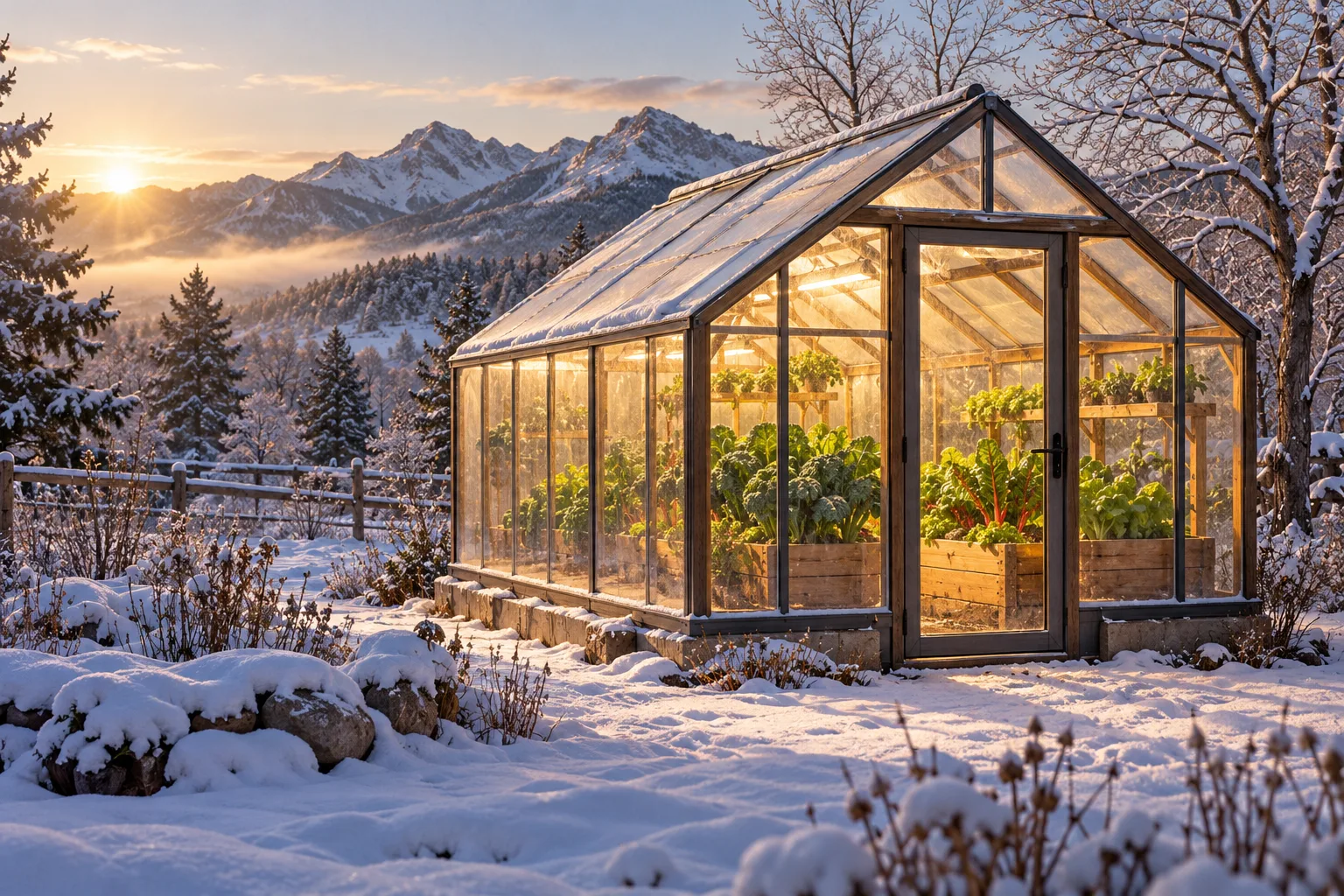
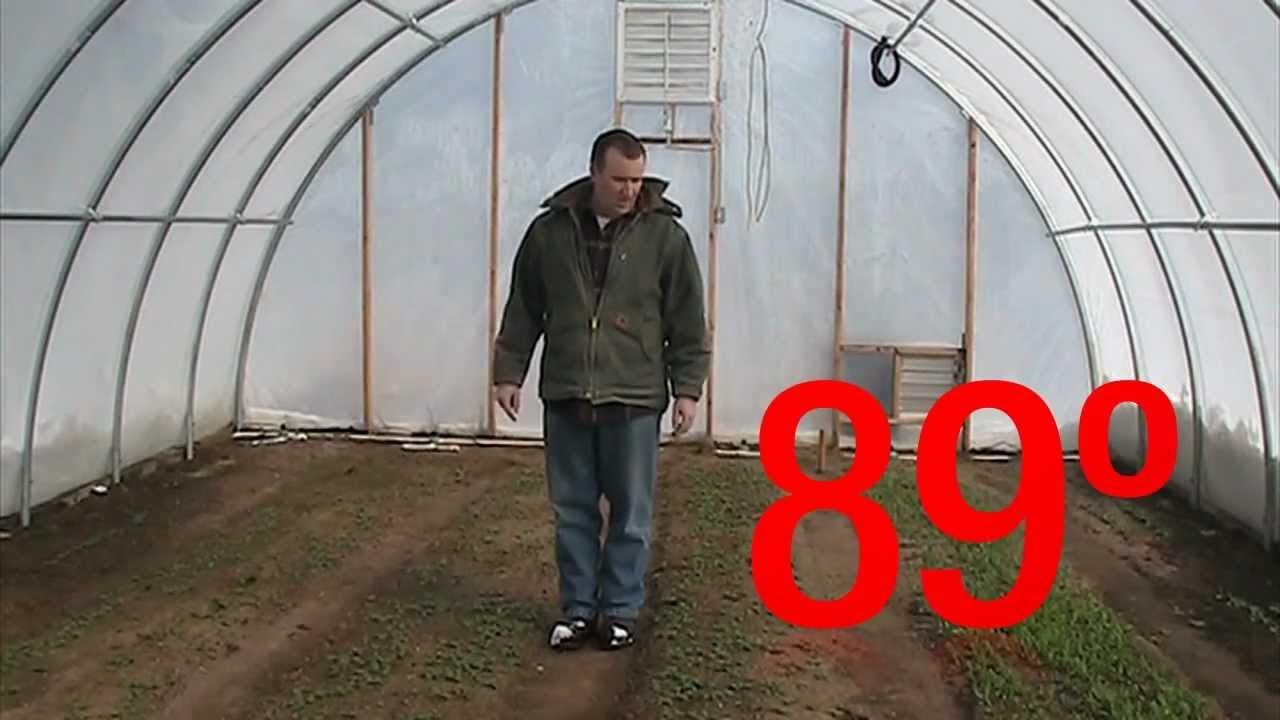
Winter greenhouse gardening can extend your growing season without routine active heating when a greenhouse captures sunlight, limits heat loss, and holds crops suited to cold conditions. In DIY Farmer’s video, Craig demonstrates the idea in Colorado Springs: it’s about 23°F outside, while the greenhouse is about 89°F during his visit. That striking contrast shows what the structure can do on a sunny day—not what every greenhouse should be expected to achieve.
Results depend on sunlight, greenhouse construction, ventilation, and local weather. Craig’s setup uses double-wall plastic that traps an insulating layer of air, and he points to Colorado’s sunshine as part of why the greenhouse warms so effectively. A cloudy location, a less insulated structure, or more severe cold may produce a very different result.
It also helps to distinguish season extension from producing heat-loving crops all winter. An unheated greenhouse can protect cold-hardy vegetables and support winter growing, while tomatoes, peppers, and other warm-season crops generally need warmer conditions. Some growers may need a heated greenhouse to maintain those conditions, with the associated cost of energy.
For winter greenhouse gardening, treat Craig’s temperatures as an example to learn from, not a guarantee. The video, “Winter Growing in a Greenhouse” from DIY Farmer, is useful for seeing how insulation, passive ventilation, crop choice, and careful watering fit together. That combination—not one temperature reading—is the central lesson of winter greenhouse gardening.
Key Takeaways for Winter Greenhouse Gardening
The practical message from winter greenhouse gardening is straightforward: retain warmth, let excess heat escape, choose cold-tolerant crops, and water according to conditions rather than following a summer routine. Craig’s greenhouse pairs double-wall plastic with a blower that inflates the space between the two layers, forming an air barrier. Roof vents and lower louvers then exchange air passively when the greenhouse heats up.
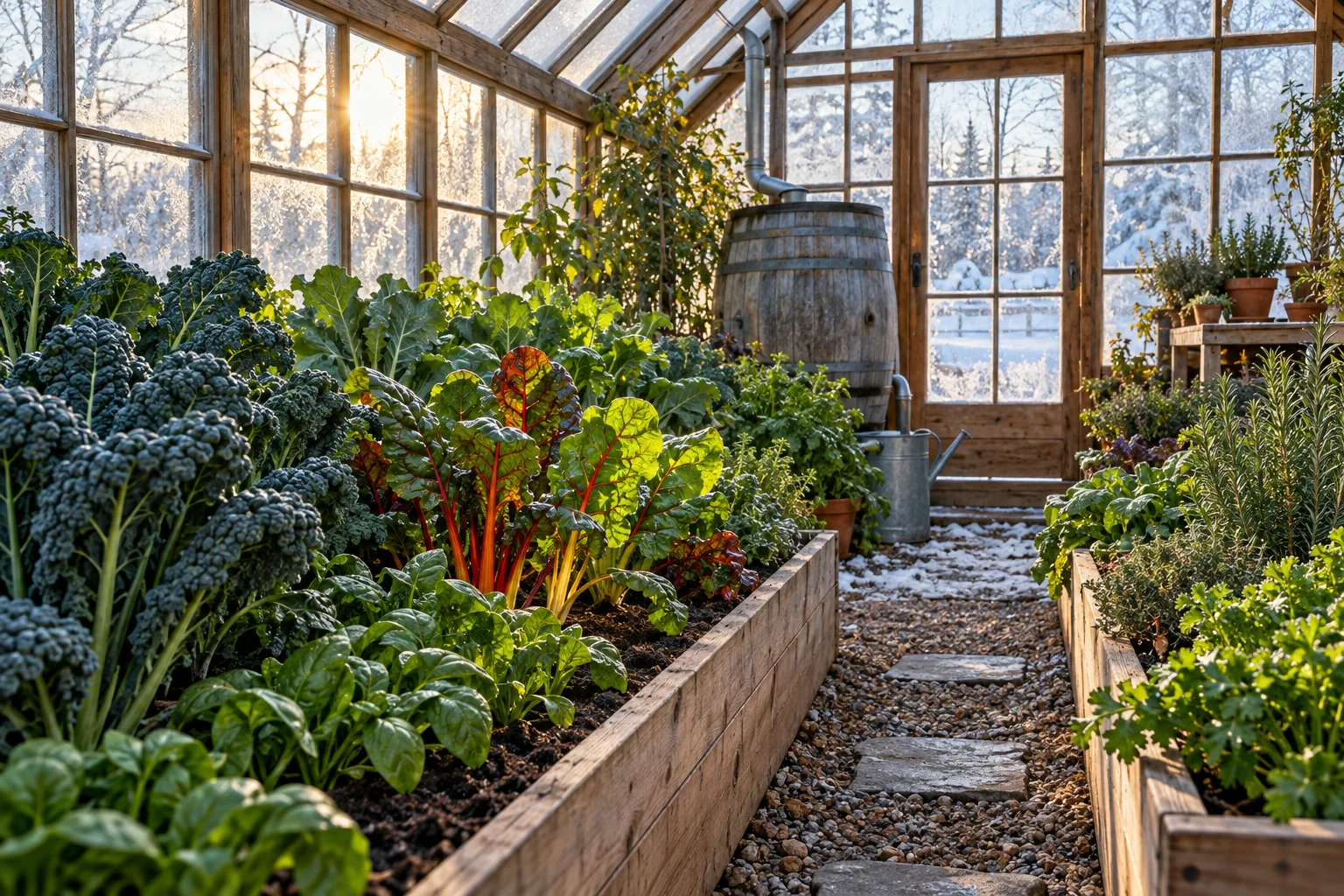
The crops provide the clearest evidence of what suits this particular setup. Craig shows spinach and arugula, explaining that they can freeze and resume growing as they warm. He also names kale, radishes, and carrots as suitable choices for his conditions. This isn’t a universal planting calendar: climate, planting date, available light, and greenhouse performance all matter.
Use this short checklist to start planning:
- Improve heat retention: understand the insulation your structure already provides and address avoidable drafts.
- Provide passive ventilation: make sure hot air can escape and cooler replacement air can enter.
- Choose cold-hardy vegetables: begin with crops the video demonstrates or names, then match varieties and timing to your site.
- Water cautiously: check soil first, since cold conditions and freezing irrigation equipment change the risk.
Beyond those basics, winter greenhouse gardening takes planning for crop timing, seed germination, short-day lighting, humidity, frost monitoring, and backup protection. Work through those needs before sowing: winter greenhouse gardening is easier to manage when you know both how plants will grow and how you’ll respond to a cold spell.
Build an Unheated Greenhouse for Season Extension
An unheated greenhouse can support season extension by collecting daytime solar warmth and reducing how quickly that warmth escapes. In Craig’s greenhouse, a small blower inflates two plastic layers. The air held between them creates an insulating barrier, which he credits as one feature helping the structure stay warm on the sunny winter day shown. This is the foundation of his approach to winter greenhouse gardening, not a substitute for checking conditions at your own site.
Ventilation matters just as much as insulation. Craig describes two roof vents that open at around 80°F using a beeswax-powered mechanism, with lower louvers opening at about the same temperature. As warm air rises and exits through the roof, the lower openings admit cooler replacement air. Without that exchange, a greenhouse can overheat even when it’s cold outdoors.
To make a structure more efficient, consider these steps:
- Inspect the envelope: identify gaps that allow avoidable drafts and maintain the glazing or covering according to its instructions.
- Understand existing insulation: double-wall plastic, like Craig’s, traps air; assess whether your structure has a comparable barrier.
- Consider thermal mass: materials that absorb warmth during the day and release it later may help moderate temperature swings; assess the space and design before adding them.
- Keep ventilation functional: test vents and louvers so they can respond when temperatures rise.
A heated greenhouse is a different choice. Cloudy or colder locations may need supplemental greenhouse heating to protect crops, but heating raises operating costs. Overhead unit heaters are one possible option; select and operate equipment according to its manufacturer’s instructions, and monitor greenhouse temperatures. Energy-saving improvements can reduce heat loss, but they can’t guarantee that supplemental heat won’t be needed for your climate. This distinction helps set realistic expectations for winter greenhouse gardening.
Choose Winter Crops by Cold Tolerance and Harvest Timing
For winter greenhouse gardening, begin with plants that suit the coldest part of your season, rather than assuming every greenhouse vegetable will thrive in winter. Craig identifies spinach and arugula as crops that can freeze in his greenhouse and resume growing as they warm. He also recommends kale, radishes, and carrots for the conditions he describes. Those observations make these crops sensible starting points, but they don’t establish a universal ranking or guarantee a harvest date.
Use a planning table to compare relative cold suitability and the order in which you expect to harvest. The sequence depends on the seed variety, sowing date, local light and temperature, and how quickly plants establish. Check seed packets for expected days to harvest, and treat those estimates as planning information rather than a promise for a cold-season greenhouse.
- First consider: spinach and arugula, demonstrated in the video, plus kale, radishes, and carrots, which Craig names.
- Evaluate as cool-season choices: lettuce, peas, leeks, onions, cabbage, and Brussels sprouts. Their suitability depends on your greenhouse conditions and planting plan.
- Reserve for warmer conditions: tomatoes, peppers, cucumbers, French beans, squash, and melons generally need more warmth than cold-hardy winter crops and may require a heated greenhouse.
- Include herbs selectively: choose them according to the warmth and light you can provide.
Greenhouse vegetable gardening is therefore a matter of matching crop needs to your structure, not simply putting any seed under cover. Think about greenhouse layout, too: keep crops accessible for harvesting and watering, and consider whether beds near the edges experience different moisture or temperature conditions. For winter greenhouse gardening, make a short crop list, verify each crop’s timing, and prioritize plants that fit your available warmth and light. That’s a more dependable plan than trying to grow warm-season and cold-hardy crops as if they had the same needs.
Plan Planting, Seed Germination, and Short-Day Light
Crop choice is the first planning decision; the next is when and how to establish each plant. Craig recommends learning from Elliot Coleman’s books, including The Four-Season Gardener and The Winter Harvest Handbook. He points to them as resources on crops suited to cold-weather growing. For winter greenhouse gardening, use guidance such as this to inform your choices, then check that recommendations suit your climate and greenhouse.
A practical planting sequence keeps timing connected to conditions:
- Choose suitable crops: shortlist vegetables with cold tolerance appropriate to your location and greenhouse.
- Check seed packets: note expected days to harvest and any germination requirements.
- Sow early enough for establishment: give plants a chance to grow before the coldest part of your season, without assuming one calendar date fits every region.
- Track results: record sowing dates and how crops respond so you can adjust future plantings.
Seed germination and mature-plant tolerance are different questions. A crop that can tolerate cool conditions after it is established may still need warmer conditions to germinate. Where warmth is required, a heated propagator can help start seeds; once seedlings emerge, move them into conditions appropriate for their growth. Follow the propagator’s instructions and avoid assuming that seedlings can tolerate the same cold as established plants.
Short winter days can also limit growth. First assess the natural light reaching your crops, considering whether structures or nearby obstructions shade them. If seedlings or crops aren’t receiving enough light, supplemental grow lights may be useful. Follow the manufacturer’s guidance on distance, operation, and timing; there’s no single light schedule or harvest date that can be recommended without knowing the crop and location. Careful observation makes winter greenhouse gardening more adaptable: note light conditions alongside planting dates, and refine your approach from season to season.
Manage Winter Ventilation, Humidity, and Plant Health
Winter temperature control means keeping heat when crops need it and releasing excess heat when the sun warms the structure. Craig reports about 89°F inside his greenhouse on a day when the outside temperature is about 23°F. Although that’s one visit in one setting, it demonstrates why a greenhouse can overheat even in winter. With winter greenhouse gardening, “cold outside” doesn’t automatically mean “no ventilation needed.”
The vent arrangement in the video addresses both heat and air movement. Roof vents open as the interior heats, while lower louvers allow replacement air to enter. This helps exchange air rather than letting warm air leave with no fresh air coming in. If you have a different system, learn how its vents operate and check them periodically. Craig’s openings are passive and use beeswax-powered mechanisms, so they don’t require electricity to open as described.
Humidity deserves attention as well. Check for condensation on the greenhouse covering and for moisture lingering on leaves. When conditions allow, ventilate to exchange damp air, while watching temperatures so you don’t lose more warmth than necessary. Avoid keeping foliage persistently wet. Damp, stagnant conditions can increase the risk of winter fungal and bacterial diseases, so remove affected plant material and keep tools and beds tidy.
Use a simple monitoring routine:
- Check indoor temperature alongside outdoor conditions before changing ventilation.
- Look for condensation and inspect foliage for persistent moisture or affected growth.
- Open vents when the structure is too warm or air is damp, provided doing so won’t expose crops to harmful cold.
- Recheck the greenhouse after conditions change.
Record what you observe so future decisions have a basis in your own greenhouse. A thermometer and regular inspection can help you balance heat retention, air exchange, and moisture management. In winter greenhouse gardening, healthy plants depend on responding to the greenhouse’s actual conditions, not just the season outside.
Water and Fertilize for Slower Winter Growth
Craig switches to hand watering in winter because his summer drip system can freeze. Hand watering lets him direct water to beds that need it and moderate or skip watering when cold conditions make freezing a concern. His approach is a useful reminder that winter watering and irrigation need a different routine from summer, especially if pipes, hoses, or drip lines are exposed to freezing temperatures.
Use a cautious sequence instead of watering automatically:
- Check the soil first. Look at the bed rather than assuming all crops need water on the same day.
- Water only where needed. Apply water directly to the bed or plants that need it, avoiding unnecessary wetting.
- Consider freezing conditions. Moderate or postpone watering when cold weather could leave water or equipment vulnerable to freezing.
- Recheck uneven areas. Craig notes that snow runoff can make beds near the edges wetter than others.
That last point matters: one greenhouse can contain different moisture conditions. Runoff near an edge may increase moisture in a bed, while another area may need water. Check each section before deciding. Hand watering takes attention, but it gives you a chance to respond to those differences instead of running a summer system regardless of winter conditions.
Fertilizer needs should also reflect growth. When plants grow more slowly and you use less water, avoid feeding as if the crop were in an active summer growth period. Don’t apply more fertilizer simply because winter growth appears slow; first consider whether the crop’s temperature, light, or water conditions are limiting it. Keep a brief record of watering, weather, and crop response, then adjust your routine based on what you observe. This measured approach keeps winter greenhouse gardening practical and helps avoid treating every bed the same.
Monitor Frost and Prepare for Extreme Cold
Craig says his Colorado greenhouse relies on captured solar warmth rather than routine propane or other active heating. His video shows the system during a sunny visit, but that example shouldn’t be treated as proof that unheated greenhouses work equally well everywhere. Persistent cloud cover, more severe cold, or a different structure may make supplemental greenhouse heating necessary. Winter greenhouse gardening requires a plan for the conditions you actually face, including the nights when daytime warmth won’t be enough.
Prepare before a cold spell, not after plants are exposed. Check indoor and outdoor temperatures, follow the forecast for your area, and identify which crops and parts of the greenhouse are most vulnerable. Decide in advance whether you’ll use backup heating and how you’ll monitor it. If you use a heater, including an overhead unit heater, follow its instructions and check temperatures rather than assuming the equipment is maintaining the right conditions.
Think through a power outage, too. If powered fans, blowers, or heaters stop working, know which functions the greenhouse can still perform passively and how you’ll reduce heat loss. Check vulnerable plants first and act according to your setup; don’t assume a powered component will be available. The video doesn’t provide a universal outage procedure, so make a plan that matches your equipment and local risks.
Near the end, the creator jokes about a scarf as “Plan B.” It’s a light moment, not a frost-protection method. Your real backup is advance preparation: working temperature checks, a realistic heating plan where needed, and a clear response if equipment fails. For winter greenhouse gardening, review those steps before winter and again when your forecast signals unusually cold conditions.
Conclusion: Put Your Greenhouse Plan Into Practice
Craig’s example shows how an unheated greenhouse can support winter growing when sunlight, insulated construction, passive ventilation, and cold-hardy crops work together. It doesn’t mean every greenhouse will reach the temperatures shown or avoid supplemental heat. Your climate and structure determine what’s realistic.
Start with four actions: check how your greenhouse retains warmth; test its ventilation; choose cold-tolerant crops and plan their sowing dates; and establish a winter routine for checking soil moisture and indoor temperature. Then add a way to monitor condensation and a backup plan for severe cold or equipment failure. If you’re considering a heated greenhouse or grow lights, read the equipment instructions and assess what your crops actually need.
Keep a simple record of planting dates, temperatures, watering, and crop response. That gives you evidence for refining next season’s plan. For a visual walkthrough of Craig’s double-wall greenhouse, passive vents, and winter crops, watch the original DIY Farmer video. Use the demonstration as a starting point, then let your own greenhouse’s conditions guide each decision.
Key Takeaways
- Double-wall plastic can trap an insulating air layer, while passive roof vents and low louvers help release excess heat and bring in replacement air.
- Spinach, arugula, kale, radishes, and carrots are cold-tolerant starting points named or demonstrated by the creator; local conditions still determine success.
- Check soil moisture before watering, account for bed-to-bed differences, and take freezing risks into account when using winter irrigation.
- Plan for short-day light, humidity, frost, and possible equipment failure; not every greenhouse can rely on solar warmth alone.
- Use the video as a practical example, then monitor your own temperatures and crop response to refine planting and care.
Frequently Asked Questions
What vegetables can be grown in a greenhouse year-round?
Cold-hardy choices include spinach, arugula, kale, radishes, and carrots, as shown or recommended by Craig. Lettuce, peas, leeks, onions, cabbage, and Brussels sprouts are also cool-season options to assess for your conditions. Crop suitability depends on climate, light, planting date, and greenhouse warmth.
Does a greenhouse work in the winter?
Yes. A greenhouse can extend the growing season by retaining warmth and sheltering crops, but results depend on sunlight, insulation, ventilation, crop selection, and local climate. Some locations or crops may require supplemental heating.
How do the Amish heat their greenhouses in the winter?
The video doesn’t discuss Amish greenhouse-heating methods, so it doesn’t provide an evidence-based answer. Craig describes his own Colorado greenhouse as relying on captured solar warmth rather than routine active heating.
What cannot be grown in a greenhouse?
The video doesn’t identify any crops that categorically cannot be grown in a greenhouse. Suitability depends on available space, temperature, light, and other growing conditions; some warm-season crops may need a heated greenhouse in winter.
Can spinach and arugula survive a freeze in a greenhouse?
Craig says he has harvested spinach and arugula when they were frozen, and that they warmed and resumed growing after the sun came out. That’s an observation from his Colorado greenhouse, not a guarantee for every variety or climate.