
AirWire 8×12 FT Greenhouse Review: Quick Take
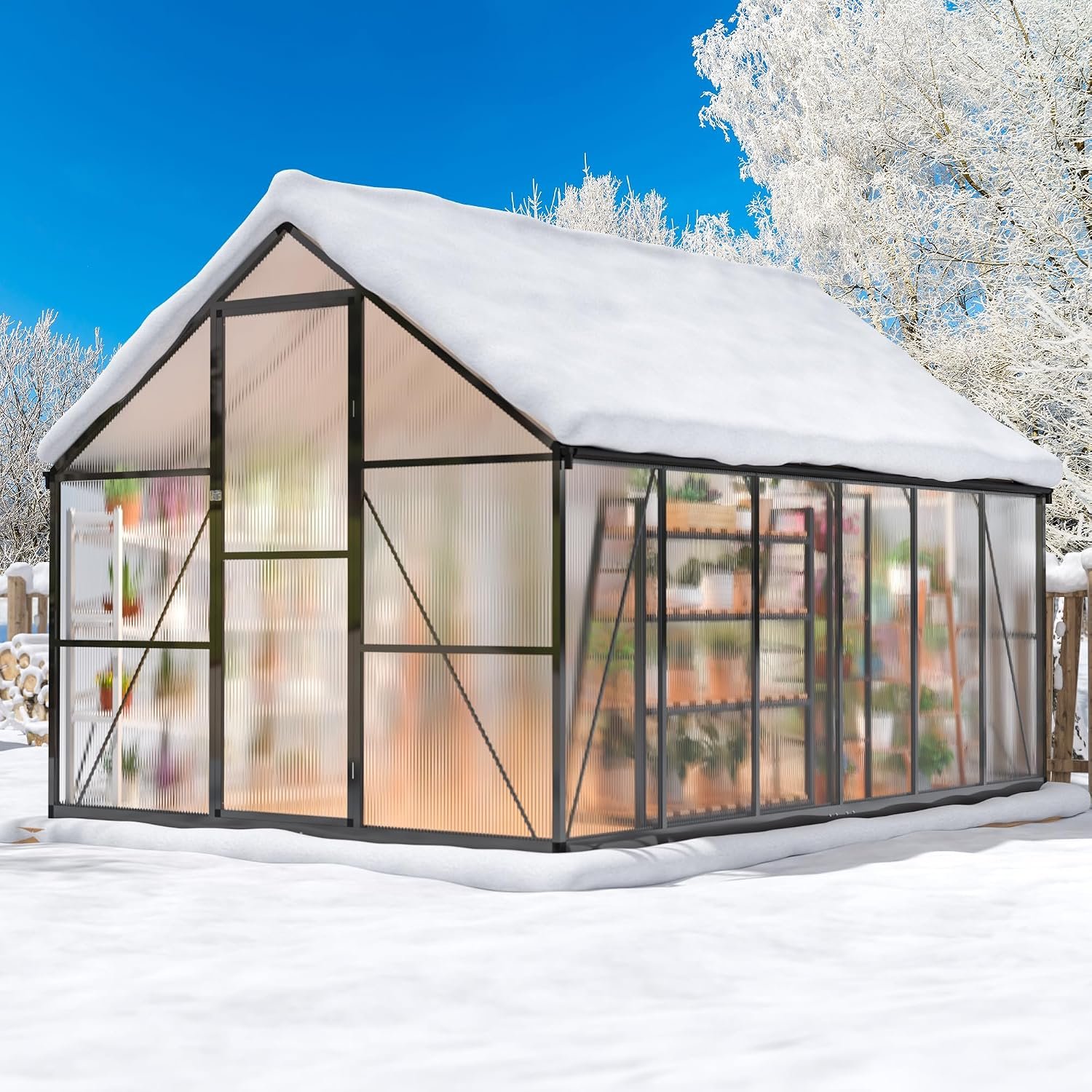
Is a $459.99 walk-in greenhouse sturdy and simple enough to justify for backyard growing in 2026? The AirWire 8×12 FT Greenhouse is built as an outdoor polycarbonate kit with a heavy-duty aluminum frame, roof vent, locking doors, and black finish, so it’s aimed at gardeners who want more than a flimsy seasonal cover.
The stock note currently says only left in stock, which matters if you’re trying to set up before seed-starting season or a cold snap. Based on the listed materials and design, this model looks best for home gardeners who want real walk-in space and better weather protection than a mini greenhouse, but who still prefer a kit-style build over a permanent glass structure.
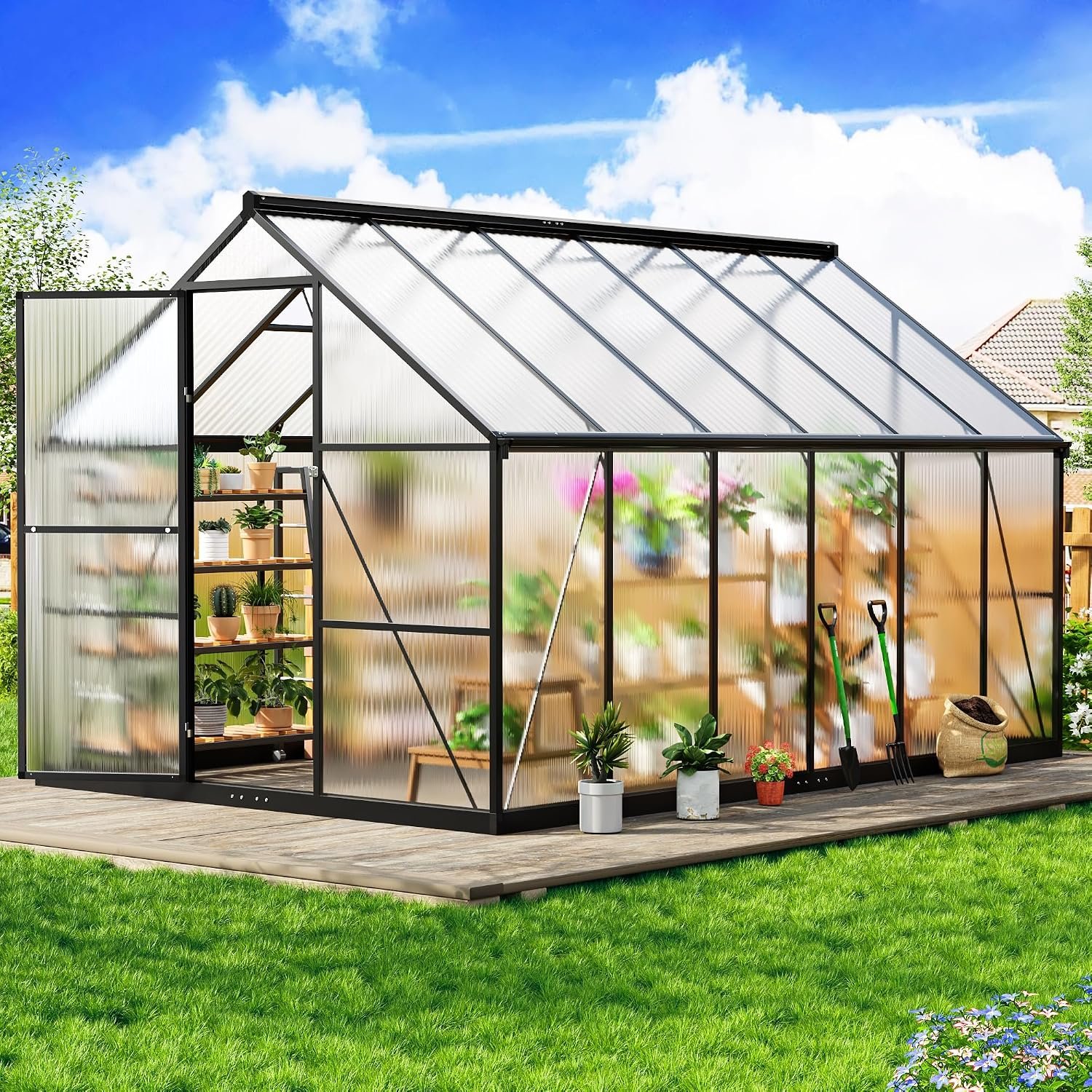

Product Overview: Size, Materials, Price, and Setup Promise
The AirWire package is designed as a complete outdoor greenhouse kit rather than a frame-only project. You get labeled components, detailed instructions, necessary tools, a slide-in panel system, roof ventilation, secure entry doors, polycarbonate sheets, and aluminum alloy framing. That matters because greenhouse kits can quickly become frustrating when parts are unlabeled or when you need to source hardware separately.
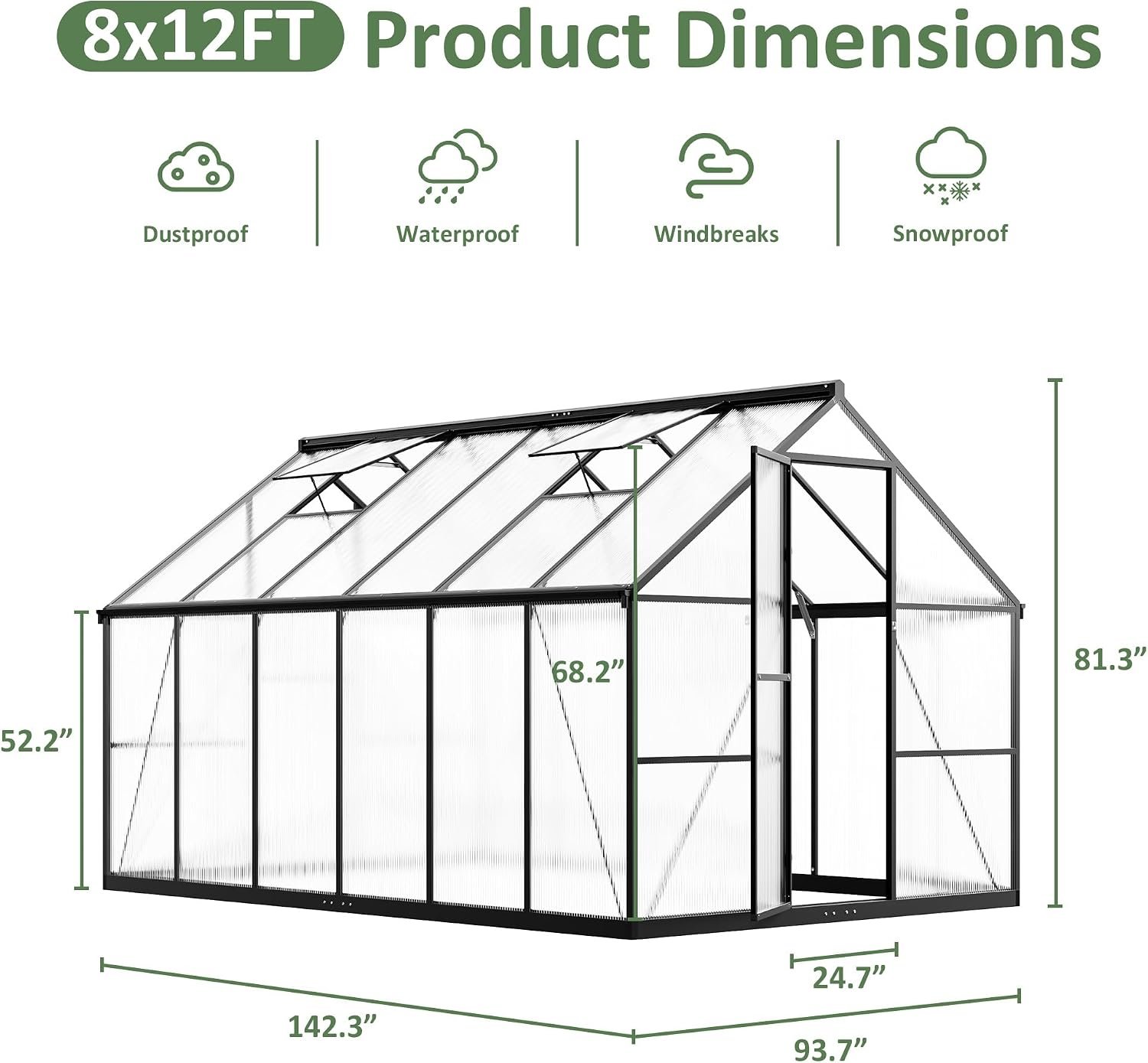
The listed core specifications are clear: an 8×12 FT footprint, 4mm thick 720g double-layer polycarbonate panels, a reinforced aluminum alloy frame, a UV-protected coating, a walk-in design, and intended outdoor backyard use. At $459.99, the AirWire 8×12 FT Greenhouse sits above small portable plastic greenhouses but below many premium hard-sided garden structures, especially glass-and-metal builds.
AirWire claims its slide-in panel system makes installation 20% faster than standard greenhouses while increasing stability by 15%. Those are manufacturer claims, not independent test results, so you should weigh them against your own assembly skill and any current customer feedback visible on the listing before ordering.
| Greenhouse type | Typical material | Ventilation | Best fit |
|---|---|---|---|
| Soft-cover greenhouse | Plastic cover over light frame | Usually zip doors or roll-up panels | Temporary seedling protection |
| AirWire 8×12 FT Greenhouse | Rigid polycarbonate with metal framing | Roof vent and doors | Backyard growing and seasonal plant protection |
| Premium rigid kit | Glass or thicker hard panels | Often multiple vents | Long-term landscaped garden installation |
Key Features of the AirWire 8×12 FT Greenhouse
The most useful features of the AirWire 8×12 FT Greenhouse are the ones that affect daily gardening: structural support, plant light quality, airflow control, access security, and the assembly system. A greenhouse can look impressive in photos, but if it overheats easily, rattles in weather, or takes days to figure out, it won’t feel like a good purchase once you start using it.
For vegetable growers, the rigid enclosure is the key upgrade over fabric or thin film. It gives you a more defined growing zone for seedlings, herbs, flowers, peppers, tomatoes, and container plants. For overwintering, it can help buffer wind and rain, although passive protection still depends heavily on local climate and setup.
What should you focus on first? Prioritize airflow if you grow densely packed trays, anchoring if your yard is exposed, and interior layout if you plan to mix tall crops with shelves. The AirWire kit gives you the foundation for a serious backyard growing area, but your results will depend on how carefully you place, secure, and manage it.
- For seedlings: use the enclosed space to reduce wind stress during early growth.
- For herbs: keep pots spaced enough that air can move between them.
- For seasonal protection: treat the greenhouse as a controlled buffer, not as a substitute for climate equipment.

Polycarbonate Panels and UV-Protected Growing Conditions
The AirWire panel design is meant to soften harsh direct sun while still admitting useful light for plant growth. Polycarbonate is popular in backyard greenhouses because it’s lighter and less fragile than glass, while feeling more substantial than thin film covers. The listed panel weight rating is also a durability-related detail, suggesting a more rigid material than lightweight plastic sheeting.
For tender plants, diffused light can be helpful because it reduces sharp hot spots across leaves and trays. That’s especially useful when you’re starting seedlings, hardening off young plants, or growing herbs that can scorch when light and heat rise quickly inside an enclosed structure.
There are limits, though. Polycarbonate can help moderate the growing environment and protect plants from rain, wind, and short cold spells, but it doesn’t turn an unheated garden structure into a fully heated greenhouse during freezing weather. If your climate drops hard overnight, plan for supplemental heat, frost cloth, or moving sensitive plants indoors.
For best results, place sun-loving crops in the brightest exposure zone and watch the interior during hot spells. If heat builds during peak summer, add shade cloth or increase spacing between containers before plants show stress.
Reinforced Aluminum Frame and Weather Protection
The frame is one of the strongest reasons to consider the AirWire 8×12 FT Greenhouse over a soft-cover option. AirWire describes the structure as suitable for strong winds, heavy rain, and blizzard conditions, but that claim should be treated as a durability promise that still depends on installation quality. A greenhouse kit is only as stable as the surface and anchoring beneath it.
Aluminum is appealing outdoors because it resists rust better than untreated steel, is easier to handle during assembly, and typically needs less ongoing maintenance. That lighter handling can be a real advantage when two people are aligning long frame sections or lifting partially assembled pieces into position.
Before building, prepare the base properly. Use a level surface, correct low spots, and decide how the greenhouse will be fixed in place before the first storm tests it. Don’t rely on frame weight alone, especially in open yards, rural properties, or gardens with wind tunnels between fences and buildings.
If you live in a high-wind or heavy-snow area, plan for a stronger foundation and routine snow clearing. No kit greenhouse should be treated as maintenance-free in severe weather, even when the product description emphasizes year-round protection.
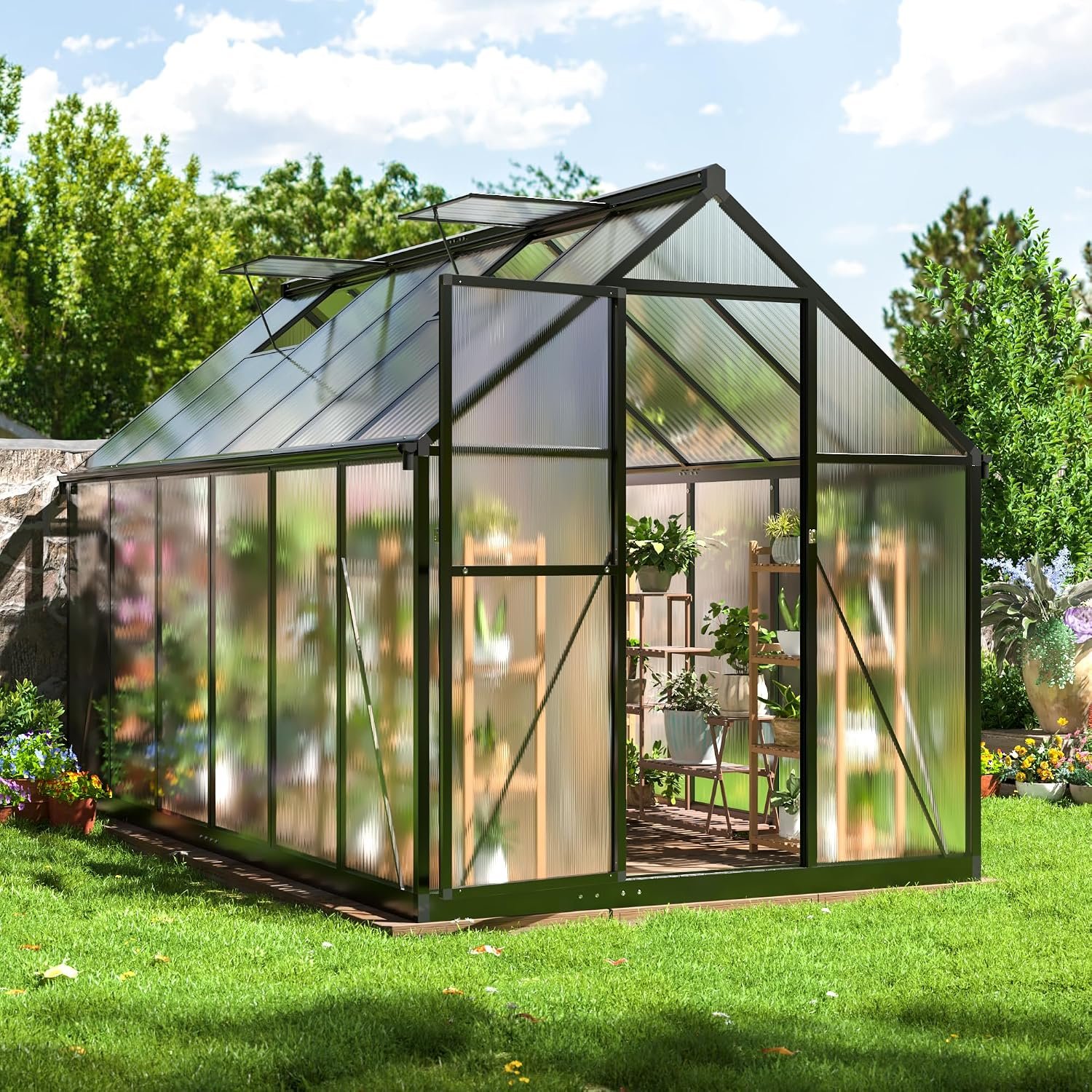
Roof Vent, Locking Doors, and Airflow Control
The adjustable roof vent is essential because enclosed polycarbonate greenhouses can heat up quickly on sunny days. Ventilation helps manage temperature, humidity, and air exchange, which becomes more important once you fill the space with trays, pots, and leafy plants. Without airflow, moisture can linger around foliage and soil surfaces.
The locking doors add two practical benefits. First, they help control access when the greenhouse is not in use. Second, they make it easier to secure the structure before rough weather, provided the rest of the frame and foundation are prepared correctly.
Use a simple operating rhythm during the first week after setup: open the vent on warm sunny days, close it before heavy weather, and check the interior temperature at different times of day. That early monitoring helps you learn how fast the greenhouse warms in your yard’s actual sun and wind conditions.
Better air movement can also reduce stagnant humidity that encourages mildew, especially when trays or pots are placed close together. If you notice condensation persisting late into the day, adjust the vent schedule and reduce crowding before plant disease becomes harder to manage.
Assembly Experience: What to Expect Before You Build
The AirWire 8×12 FT Greenhouse is marketed around easier installation, with labeled parts, instructions, included tools, and a slide-in panel approach intended to reduce the pain of older panel-and-clip designs. That doesn’t make it a tool-free shelter. You should still treat it as a real build that benefits from patience, organization, and another set of hands.
A sensible build sequence starts with choosing the location, preparing the ground, sorting the labeled components, assembling the base and frame, sliding the panels into their channels, installing the vent and doors, and then anchoring the finished structure. Rushing the early steps is where greenhouse kits often go wrong because small frame alignment errors can show up later when panels don’t seat cleanly.
- Clear the footprint plus extra working room so you can move long pieces without bending panels or stepping on hardware.
- Lay out all parts before fastening and match labels to the instructions before tightening the frame.
- Recruit a second person for frame alignment and panel handling, particularly when wind could catch loose panels.
AirWire also promises 24/7 customer service, which could be useful if part identification or assembly steps cause problems. Since no actual support performance evidence is provided in the product data, treat that as a listed service claim rather than a guaranteed experience. Photograph parts, hardware bags, and packaging before assembly in case you need replacement components or follow-up support.
What Customers Are Saying
No verified star rating or review count was included with the product data provided for this AirWire 8×12 FT Greenhouse review. That means it would be irresponsible to claim that verified buyers praise or criticize specific performance details. Before you purchase, check the current listing for the actual rating, number of reviews, and recent buyer photos because greenhouse feedback can change quickly as more people assemble and weather-test the kit.
When review data is available, look for comments that answer practical ownership questions. Customer reviews indicate the most useful patterns when they describe assembly time, missing parts, panel fit, door alignment, roof vent operation, and storm performance. Verified buyers report the most credible details when they include photos after installation or after a period of rain, wind, or seasonal use.
Separate the feedback by buyer type. First-time greenhouse owners may focus on whether the instructions are clear. Experienced backyard gardeners often comment on airflow, growing space, and layout efficiency. Buyers upgrading from plastic-covered mini greenhouses usually compare rigidity, appearance, and how secure the panels feel.
Scan for repeated wording rather than one-off complaints. Phrases such as missing parts, unclear instructions, panels fit tightly, handled storm well, temperature control, or plenty of room can tell you whether the listing promises match real-world use. If the AirWire greenhouse is rated on Amazon when you check, give more weight to recent reviews with installation photos than to short star-only comments.
Best Uses: Who the AirWire 8×12 FT Greenhouse Is For
The AirWire 8×12 FT Greenhouse is best for backyard gardeners who want a dedicated walk-in structure for seed starting, tomatoes, peppers, herbs, flowers, container plants, and seasonal weather protection. It makes the most sense when you’ve outgrown small shelf-style units and want enough structure to organize a more serious growing routine.
This is also a good fit if you want sturdier panels than a soft polyethylene cover but don’t want the cost or permanence of a custom glass greenhouse. You still get a hard-sided kit format, which is easier to buy as a package and less complex than designing a greenhouse from separate materials.
It may appeal to you if labeled components and included tools are priorities. Not everyone wants to spend weekends matching generic hardware to unclear diagrams, and AirWire’s assembly-focused design directly targets that pain point.
Use this simple decision framework: choose this greenhouse if you need rigid panels, a structure intended to stay up across seasons, and controllable ventilation. Consider a smaller alternative if your only goal is temporary frost protection for a few seed trays or if you need something that can be packed away after spring.
Who Should Consider a Different Greenhouse
Not every gardener should choose the AirWire 8×12 FT Greenhouse. Renters who can’t anchor an outdoor structure, buyers with very limited yard space, and gardeners needing a heated commercial-grade environment should look elsewhere. A hard-sided kit requires planning, placement, and a level of commitment that a portable mini greenhouse does not.
Climate also matters. In severe winter conditions, you should plan for snow removal, secure anchoring, and optional heating or insulation instead of relying only on passive protection. The structure may shield plants from exposure, but sensitive crops still need temperature management when conditions turn harsh.
If you want a tool-free pop-up shelter, this AirWire model will likely feel like too much project. Smaller portable greenhouses are easier to move, cheaper to replace, and better suited to short-term seedling protection, even if they don’t offer the same hard-sided feel.
Before ordering any outdoor greenhouse kit, confirm HOA rules, property setbacks, and foundation requirements. That step is dull but important; the last thing you want is to finish assembly and then discover that the structure violates a neighborhood or property rule.
Value Assessment at $459.99
At $459.99, the value of the AirWire 8×12 FT Greenhouse comes from combining rigid plant protection, metal framing, ventilation, secure access, organized assembly parts, included tools, and a customer support promise in one package. It is not the cheapest way to cover plants, but it is also not priced like many premium permanent greenhouse builds.
The main value advantage over soft-cover greenhouses is durability and appearance. Rigid panels generally look cleaner in a backyard and are less like a temporary tarp-covered frame. The kit format keeps the project more accessible than a custom build, especially for shoppers who don’t want to design every component from scratch.
The current stock note says only left in stock, so verify availability before comparing delivery timelines or scheduling a build weekend. Treat that as a planning detail, not a reason to rush past checking competing models, shipping terms, or updated review information.
| Option | Cost tier | Durability expectation | Setup effort |
|---|---|---|---|
| Budget plastic greenhouse | Low | Seasonal and temporary | Usually simple |
| AirWire polycarbonate kit | Mid-range | More substantial backyard structure | Moderate kit assembly |
| Premium glass/aluminum greenhouse | High | Long-term garden feature | Higher planning and build effort |
- Compare panel thickness and panel type.
- Check the frame material and anchoring expectations.
- Look at ventilation design and door access.
- Confirm included hardware, tools, and support claims.
- Read current buyer feedback before deciding.
Amazon Alternatives Worth Comparing
The AirWire 8×12 FT Greenhouse should be compared with similar hard-sided kits before you commit. Two names worth checking on Amazon are the VEIKOU 8×12 FT Polycarbonate Greenhouse and the YITAHOME 8×12 FT Polycarbonate Greenhouse. Both are commonly considered by shoppers looking for backyard polycarbonate greenhouse kits in a similar size class.
Compare them on the details that affect ownership, not just the product photos. Look at frame material, panel design, number and placement of roof vents, door style, current price, shipping terms, and buyer feedback. If one model has more ventilation or a better documented wind-performance history from recent owners, that may matter more than a small price difference.
AirWire may make more sense if you prioritize its slide-in panel system, clearly labeled components, stated panel construction, and/7 support promise. Those details are especially appealing if assembly is one of your biggest worries.
An alternative may be smarter if it has more vents, a stronger stated weather rating, a lower current sale price, better documented customer ratings, or a layout that fits your yard more naturally. Before choosing among these kits, compare current price, shipping, stock status, review count, and recent buyer photos side by side.
How to Decide Before Buying the AirWire 8×12 FT Greenhouse
Before buying the AirWire 8×12 FT Greenhouse, make the decision practical rather than emotional. Confirm your yard space, foundation plan, local weather exposure, ventilation needs, plant capacity, and assembly help. If any of those pieces are uncertain, solve them before the boxes arrive.
Map your plant zones before ordering. Put seed trays where they’ll get steady light, place taller crops where they won’t shade everything else, and preserve walking space for watering, pruning, and moving supplies. A greenhouse that’s packed too tightly becomes harder to ventilate and harder to enjoy.
Check the listing again for current price, stock, delivery details, and any updated rating or review count. The strongest reasons to consider this model are its rigid UV-protected enclosure, reinforced metal structure, walk-in growing area, adjustable roof ventilation, secure doors, and assembly-focused kit design.
If you’re a serious home gardener who wants a permanent-feeling backyard greenhouse kit at a mid-range price, this AirWire model deserves a close look. If you only need a temporary pop-up cover for a few weeks, it’s probably more greenhouse than you need.
Pros and Cons
Pros
- Hard-sided polycarbonate construction offers a more substantial growing environment than soft plastic covers.
- Reinforced aluminum alloy frame is appealing for outdoor use because it resists rust and is easier to handle than heavier materials.
- Adjustable roof vent and locking doors help with airflow, access control, and day-to-day greenhouse management.
- Labeled components, included tools, and slide-in panel design are useful for shoppers worried about complicated assembly.
- $459.99 pricing places it below many premium permanent greenhouse builds while offering more structure than budget mini greenhouses.
Cons
- No verified star rating or review count was provided, so real-world customer satisfaction needs to be checked on the current listing.
- It is not a tool-free pop-up shelter and requires careful assembly, alignment, and anchoring.
- Passive polycarbonate protection will not replace heating in freezing climates.
- Gardeners in high-wind or heavy-snow regions should prepare a strong foundation and maintenance plan.
- The current availability note says only left in stock, which may complicate time-sensitive garden planning.
Final Verdict
Key Takeaways
- The AirWire 8×12 FT Greenhouse is a mid-range hard-sided backyard kit priced at $459.99.
- Its strongest listed features are rigid polycarbonate panels, reinforced aluminum framing, roof ventilation, locking doors, and an assembly-focused slide-in system.
- No verified rating or review count was provided, so shoppers should check the current listing for recent buyer photos and feedback before ordering.
- It is best for serious home gardeners who want more protection and space than a mini greenhouse without moving to a premium permanent glass structure.
- Proper foundation planning, anchoring, airflow management, and weather maintenance are essential to getting good results.
Frequently Asked Questions
Is the AirWire 8×12 FT Greenhouse heated?
No. The listed product data describes a passive outdoor polycarbonate greenhouse with roof ventilation and doors, not a heated greenhouse. In freezing climates, you should plan for supplemental heat or frost protection for sensitive plants.
Does the AirWire greenhouse come with tools?
Yes. The product description says necessary tools are included, along with labeled components and detailed instructions. You should still prepare for a real kit assembly and consider having a second person help.
How much does the AirWire 8×12 FT Greenhouse cost?
The listed price is $459.99. Check the current listing before purchasing because price, availability, shipping, and review information can change.
Is this greenhouse better than a plastic mini greenhouse?
It is better suited to gardeners who want a more substantial walk-in structure with rigid panels and metal framing. A plastic mini greenhouse may be better if you only need short-term seedling protection or a portable setup.
Can the AirWire greenhouse handle bad weather?
AirWire describes the greenhouse as built for strong winds, heavy rain, and blizzards, but real performance depends heavily on proper installation, anchoring, foundation preparation, and maintenance such as clearing snow.
Disclosure: As an Amazon Associate, I earn from qualifying purchases.
