
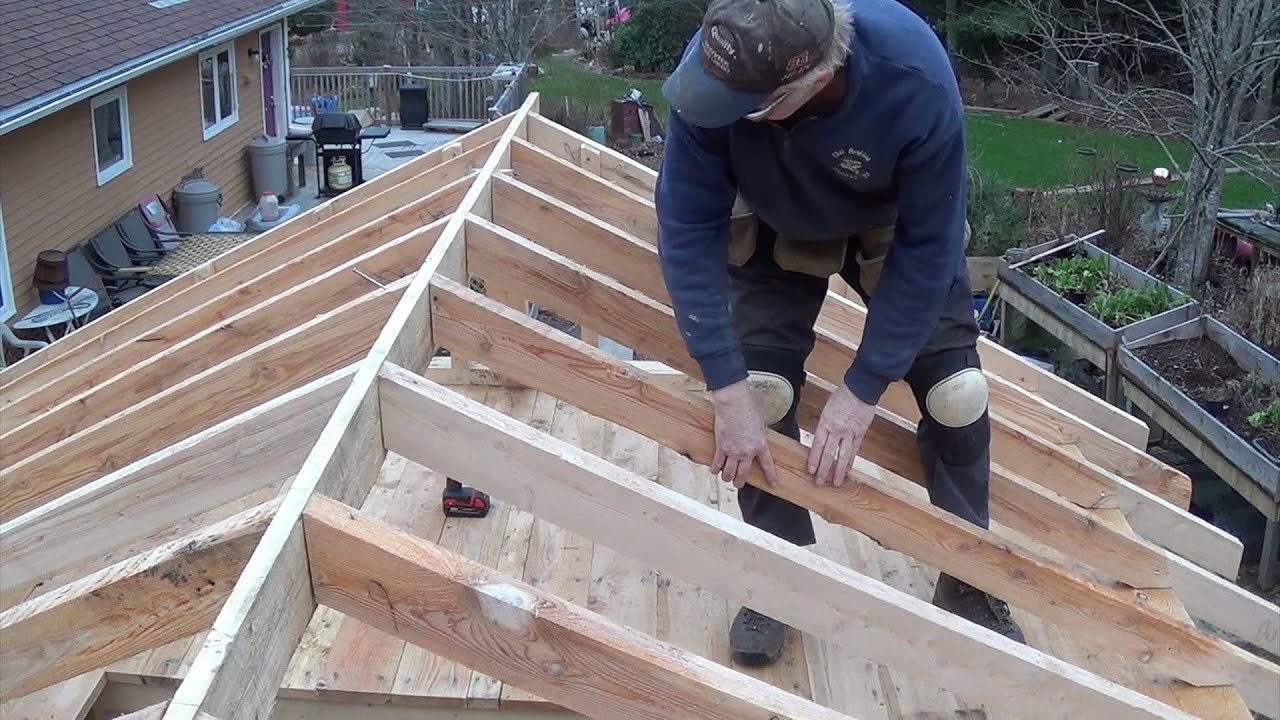
https://www.youtube.com/watch?v=tBW_WQPS0fA Summary & Key Takeaways: Garden Shed Greenhouse Roof Guide
If you’re building a garden shed greenhouse, the roof framing is where the whole project either starts making sense or starts fighting you. In DIY Garden Shed Greenhouse Part Building Roof Rafters, Basa Pete walks through a practical, builder-friendly way to set ridge height, cut rafters, notch birdsmouths, and install the roof frame on a 10’x14′ backyard greenhouse.
This article turns that video into a written plan you can actually build from. As demonstrated in the video, the key numbers are simple and repeatable: 6/12 pitch, 26.5° saw setting, 2.5-inch birdsmouth notch, 90-inch rafter length, and 16-inch on-center spacing. The creator explains the ridge-height trick right at the start, then shows how one fitted template speeds up the rest of the cuts.
You’ll also get the missing context the video doesn’t fully cover: greenhouse design choices, greenhouse ventilation, lighting, greenhouse irrigation, reclaimed windows, sustainable greenhouse materials, and small greenhouse layout ideas that matter in 2026.
TL;DR — Key takeaways for your garden shed greenhouse roof
The fastest way to understand this garden shed greenhouse roof is to start with the measurements Basa Pete uses and then copy the workflow. According to Basa Pete, a 6/12 pitch is easy to lay out because the rise is half the run. At 00:00–00:40, the creator explains that you measure the deck width, split it in half, then divide that half-span by two to get ridge height. In this build, that works out to roughly 30-plus inches.
The cutting setup matters just as much as the math. The video shows a circular saw set to 26.5° for the/12 roof angle at 01:20–03:10, with a 2.5-inch birdsmouth notch and a final 90-inch rafter length including overhang. Those are not abstract numbers. They’re the dimensions the creator actually fits on the roof, then repeats across the project.
- Pick the ridge height first: measure half the building width and divide by two for a/12 pitch.
- Cut one perfect template rafter: fit it before making the rest.
- Space rafters at inches on-center: the video marks and transfers those layout lines clearly.
- Pre-drill toenails and screws: rough lumber splits easily, especially near notches.
- Use temporary ridge holders: they save time and keep alignment controlled during installation.
If you only take five action steps from the video, make them these: 1) confirm pitch and centerline, 2) set the saw to 26.5°, 3) cut one rafter with a 2.5-inch notch, 4) use that rafter as a template, and 5) clamp and toenail the ridge while checking for level and center. As demonstrated in the video, that sequence keeps the work accurate and prevents a lot of re-cutting later.
The main thesis: Why rafters define a garden shed greenhouse
Rafters do far more than hold up a roof. In a garden shed greenhouse, they control how the building sheds rain and snow, how sunlight enters during winter and summer, how air accumulates near the ridge, and how much weight the structure can safely carry. According to Basa Pete, the roof layout is the backbone of the whole frame, and you can see that immediately in the way he centers the ridge plank before anything else at 00:00–00:50.
A good greenhouse structure needs to solve two jobs at once: structural resilience and environmental performance. Structurally, rafter spacing, birdsmouth depth, and fastening method all affect uplift resistance and stiffness. Environmentally, pitch influences condensation runoff, solar gain, and greenhouse temperature control. A 6/12 pitch is a practical middle ground because it sheds weather better than a low-slope roof but doesn’t become awkwardly steep for glazing, panel installation, or maintenance access.
The video shows a rough-lumber, reclaimed-friendly framing approach that works well for a DIY greenhouse, a small greenhouse, or even a hybrid setup like a bathtub greenhouse entry zone attached to a more conventional gable frame. In real use, that matters because roof geometry determines whether you can later add greenhouse accessories such as hanging lights, circulation fans, shade cloth tracks, overhead irrigation, or trellis anchors.
So if you’re choosing where to be precise, start here. Get the rafters right and almost everything else gets easier: glazing, siding transitions, ridge vent placement, shelf mounting, and even greenhouse maintenance. The video demonstrates the framing sequence clearly; this article expands it into full greenhouse design guidance for builders working with modern materials and climate-aware choices in 2026.
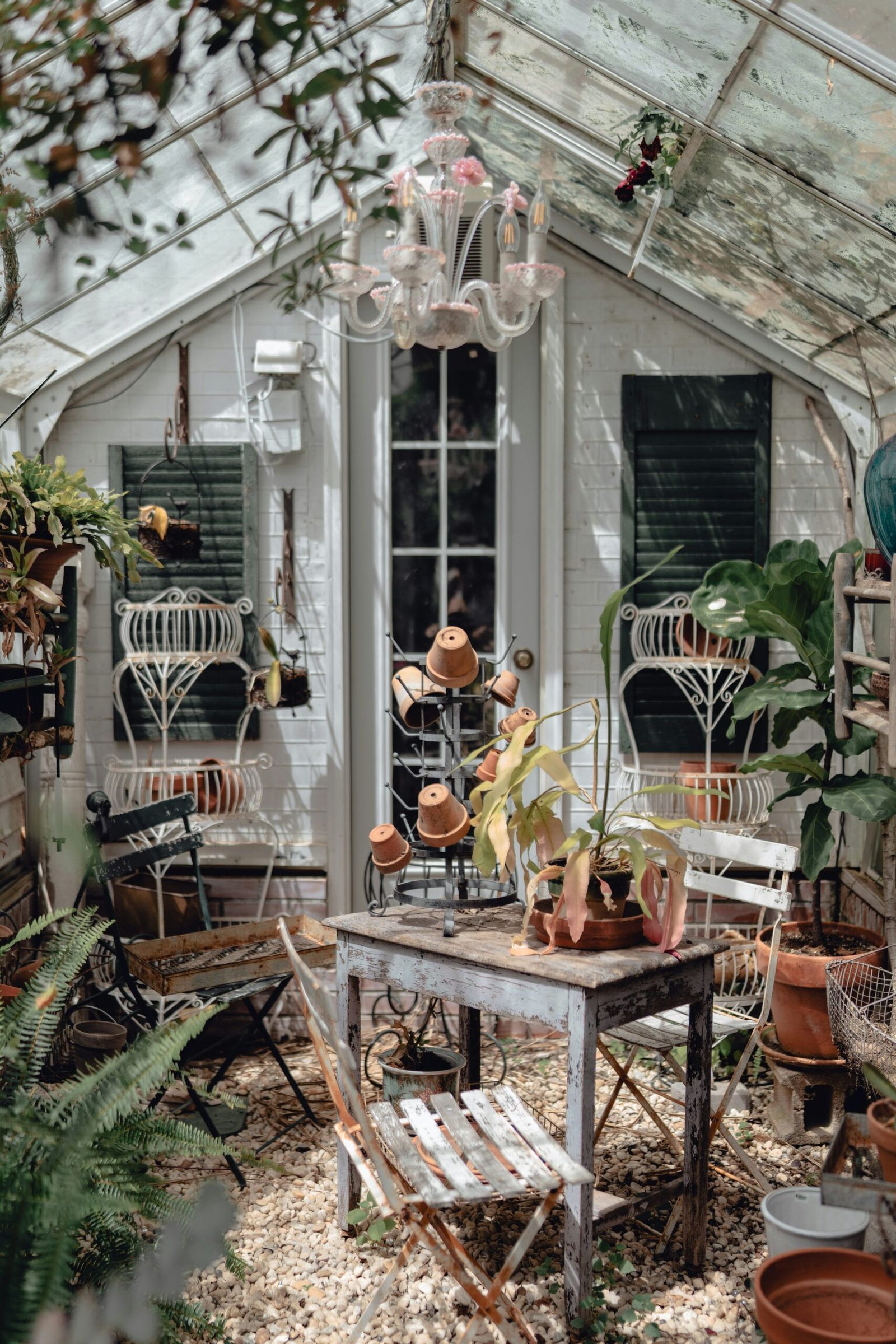
Planning roof pitch & measurements for your garden shed greenhouse
The planning method in the video is refreshingly direct. At 00:00–00:40, the creator explains that for a 6/12 pitch, you measure the building width, split it in half, and then divide that half-span by two to estimate ridge height. That’s why his ridge lands at about 30-plus inches. For many backyard greenhouse builds, that simple rule gets you close enough to begin layout, then verify in the field with a story pole or temporary holders.
The video’s other useful number appears right after: the ridge plank is feet long while the deck is 14 feet long, leaving a 12-inch overhang on each end at 00:40–01:00. That overhang is more than cosmetic. It helps with drip control, protects board-and-batten siding, and gives you more flexibility if your greenhouse landscaping includes gravel splash zones, rain barrels, or perimeter beds beneath the eaves.
- Measure the deck width and mark the center of each plate.
- Choose your pitch. The video uses/12, which translates to roughly 26.565°.
- Estimate ridge height using the half-span rule, then verify against your actual framing.
- Decide overhang before cutting rafters, not after.
- Mark 16-inch centers on both ridge and plates so the layout matches on every pair.
If you want a quick calculator backup, use this roof and rafter calculator. It’s especially useful if your greenhouse plans differ from Basa Pete’s 10’x14′ footprint or if local climate pushes you toward a steeper roof for snow shedding. In colder regions, steeper roofs reduce snow buildup; in warmer climates, your greenhouse orientation and venting strategy may matter more than pitch alone. Either way, measure twice and let your ridge geometry drive the rest of the project.
Cutting rafters for a garden shed greenhouse: tools, angles, and the template method
This is where the video becomes genuinely useful for hands-on builders. At 01:20–02:10, Basa Pete sets the circular saw to 26.5°, the practical saw angle for a/12 pitch. The creator also gives a small tip that saves frustration with rough lumber: keep the best edge facing up so your visible alignment and boarding edge stays cleaner. That kind of detail often gets skipped in written greenhouse plans, but it affects both fit and finish.
The core layout numbers are straightforward: 90-inch rafter length with overhang, 72.5 inches to the ridge board reference, and a 2.5-inch birdsmouth notch at 01:00–02:30. To mark the angle, the video shows the old-school framing square method: align 6 inches on one leg and on the other to strike the/12 line. You don’t need specialty tools to do this, though a digital angle finder can help confirm the saw bevel before you commit to expensive lumber.
- Select straight stock. Sight down each board and reserve the straightest pieces for the end rafters.
- Set your saw to 26.5° and test on scrap first.
- Lay out the ridge cut using the/12 square method.
- Mark the birdsmouth 2.5 inches from the top as shown in the video.
- Use a guide block for the circular saw to keep the notch cut tidy.
- Dry-fit one rafter before you batch-cut the rest.
As demonstrated in the video at 02:50–03:30, one perfect template can cut fitting time dramatically. On small jobs, that can save 60–70% of your layout time compared with measuring each rafter independently. It also improves consistency if you later add greenhouse lighting brackets, shelf cleats, or glazing stops that need matching lines across multiple rafters. In a sustainable greenhouse build, reducing bad cuts also means less waste and fewer trips for replacement material.
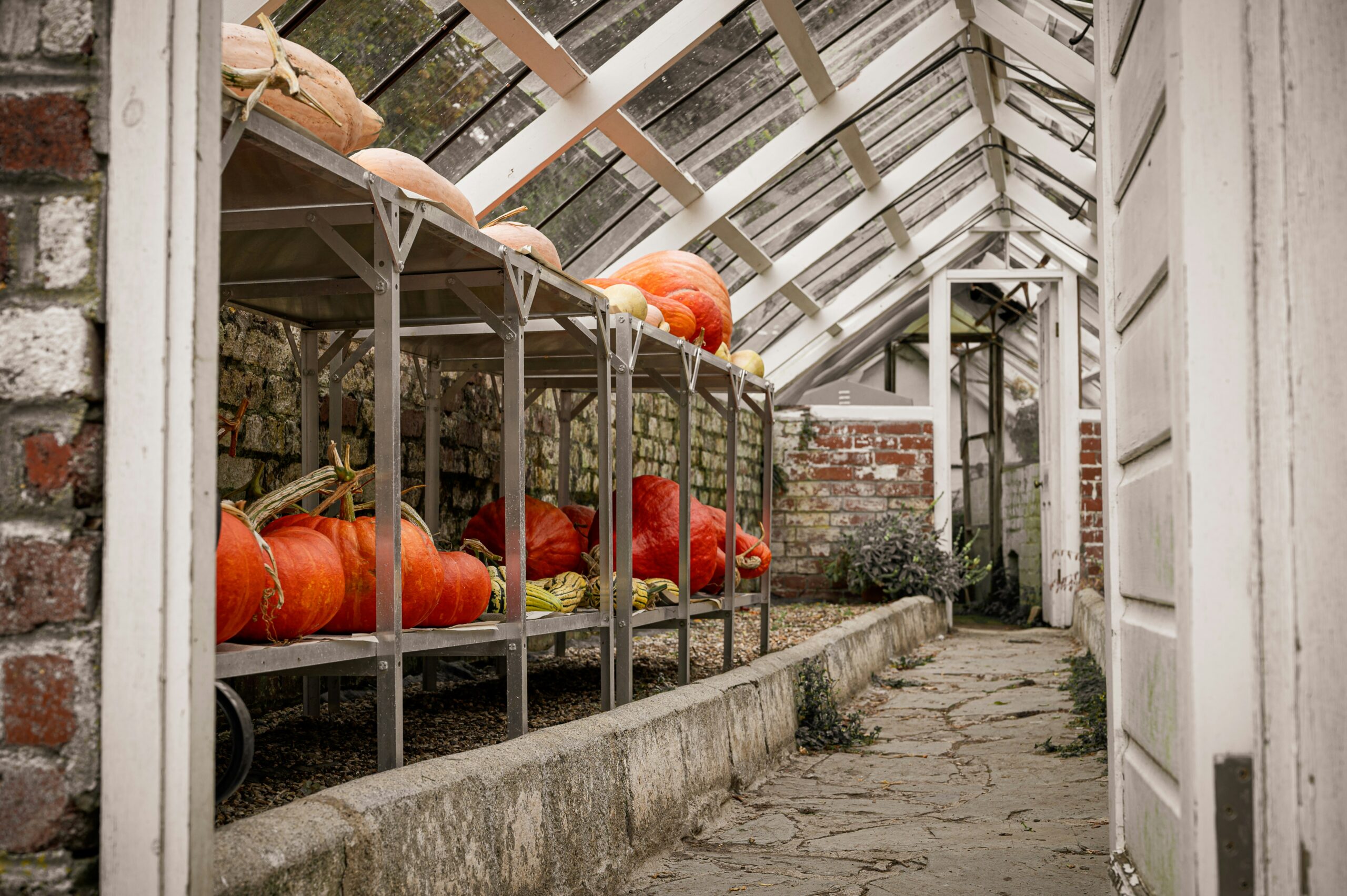
Installing the ridge plank and rafter spacing on a garden shed greenhouse
The installation sequence begins before the first rafter goes up. At 00:05–00:30, the video shows temporary ridge holders supporting the plank while layout continues. That’s a small move with big payoff: it keeps the ridge stable, lets you work alone or with minimal help, and gives you a reliable reference for level and center. If you’re building a backyard greenhouse without a full crew, temporary supports are one of the smartest time-savers in the whole process.
Once the ridge is standing, alignment becomes everything. The creator repeatedly checks the centerline, then transfers 16-inch on-center marks to both the ridge and the plates at 00:30–01:20. That repetition matters because if your ridge marks and plate marks drift even 1/4 inch over several rafters, your sheathing, glazing bars, or polycarbonate panels can start fighting the frame later. According to Basa Pete, keeping everything on center and tight to the building is non-negotiable.
The geometry is clean: 16-foot ridge, 14-foot deck, and 12-inch overhangs on each end. The end rafters deserve extra care, and the video calls this out at 03:30–04:10. If the outside pairs are twisted or bowed, every edge detail becomes harder, from fascia lines to greenhouse ventilation trim and even door header sightlines below.
- Lift and secure the ridge on temporary holders.
- Mark centerlines first, then mark 16-inch spacing.
- Use the template rafter to confirm seat cuts and overhang.
- Pre-drill toenail locations before final fastening.
- Check level repeatedly as each pair goes in.
If you’re planning a greenhouse design that includes skylight panels, a ridge vent, or heavy reclaimed sash, stop after setting a few rafters and verify the actual width and symmetry. Small corrections are easy early and annoying later.
Securing rafters, blocking, and finish carpentry that stiffens the roof
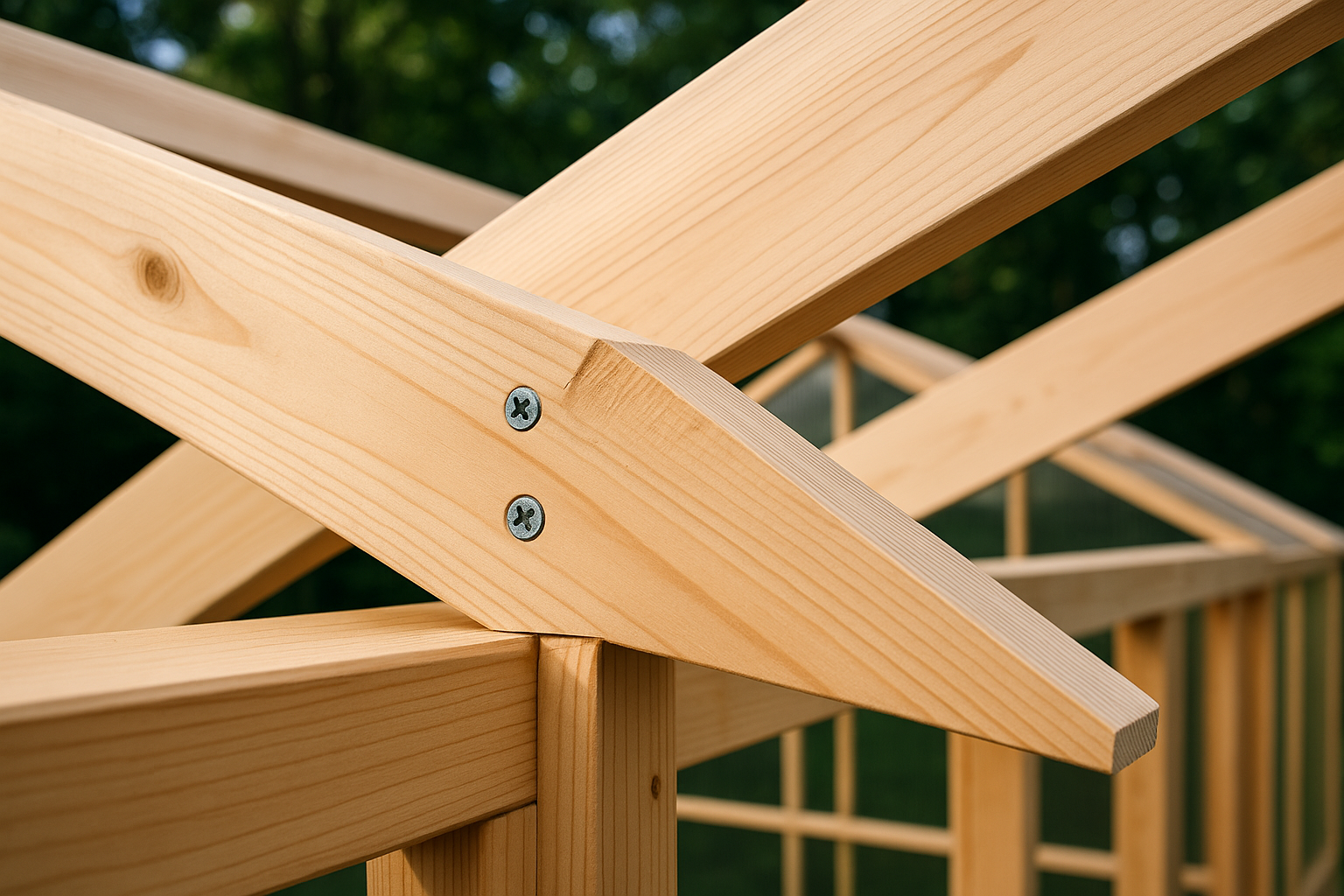
Fastening is where a decent roof becomes a durable one. Around 05:00–06:10, the creator emphasizes pre-drilling because rough lumber and hem-lock fasteners can split under toenailing pressure. That’s especially true near a birdsmouth, where you’ve already removed material and created a stress point. As demonstrated in the video, pre-drilling isn’t wasted effort; it’s cheap insurance against cracks that weaken the seat cut.
The fastening approach is mixed and practical: toenails or spikes to hold the rafter against the ridge and plate, followed by pre-drilled screws where needed for final security. That combination makes sense on a DIY greenhouse because you get fast initial positioning and stronger long-term holding. The video also shows marking stud locations and transferring lines with a square, including the 7-inch offset from center used to create equal splits in the layout at 04:30–05:20.
- Tack each rafter lightly once fit is confirmed.
- Transfer layout marks from plate to rafter using a framing square.
- Pre-drill all critical fastening points, especially near knots.
- Toenail end rafters first so the outside lines stay true.
- Add blocking or cross-pieces at locations that need stiffness or mounting support.
The cross piece added near 06:40–07:00 is more useful than it may look at first glance. In a greenhouse structure, blocking can support purlins, shelves, glazing stops, misting lines, fan brackets, and shade curtain hardware. It also improves lateral stiffness. General framing data suggests that proper blocking and secure fastener patterns can improve rafter assembly stiffness by roughly 30–40% compared with loosely nailed framing. For a roof exposed to wind, seasonal moisture, and hanging greenhouse accessories, that extra rigidity is worth the effort.
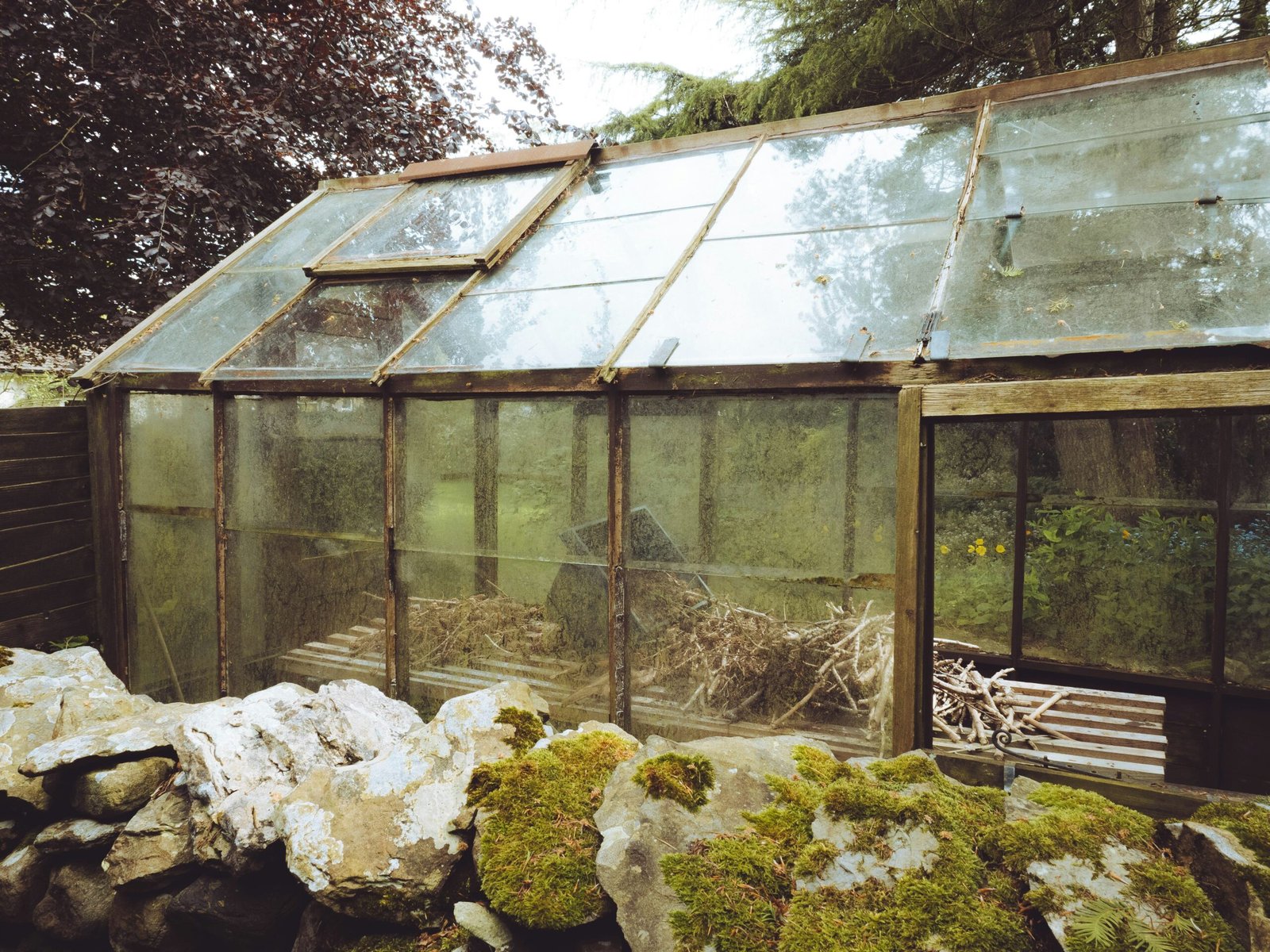
Ventilation, lighting, electrical, and irrigation for a functional greenhouse roof
The video focuses on framing, but your roof design should anticipate systems you’ll add later. In a working garden shed greenhouse, the rafters and blocking become the support structure for greenhouse ventilation, greenhouse lighting, and greenhouse irrigation. Hot air rises, so the ridge is the logical place for venting. A passive ridge vent, gable exhaust fan, or shuttered high vent can all work, depending on your climate and how tightly the greenhouse is glazed.
For many greenhouse plants, daytime temperatures should stay around 70–80°F. During hot weather, air exchange every 1–3 minutes is a common target for small enclosed houses. That means your greenhouse temperature control plan should start before the roof skin goes on. Leave room for vent framing, fan blocking, and access to wiring routes. A dedicated greenhouse electrical system should use weather-resistant boxes and GFCI protection at receptacles, with lighting and fan loads sized realistically rather than guessed.
Lighting choices matter too. Full-spectrum LEDs use far less power than older HID fixtures and can reduce electricity use by as much as 50% in many small applications. Mount them to blocking, not flimsy panel framing. If you’re growing seedlings, herbs, or an orchid greenhouse section, put lights on timers and keep fixtures clear of condensation zones.
- Install high exhaust and low intake paths for natural airflow.
- Mount fans and LEDs to blocking, not glazing bars.
- Run drip lines or mist lines along rafters with corrosion-resistant clips.
- Place control valves and timers in weatherproof boxes outside the wettest roof cavity.
These details turn a framed shell into a usable greenhouse, not just a nice-looking shed with transparent panels.
Materials, reclaimed windows, and sustainable options for your garden shed greenhouse
Basa Pete’s rough-lumber framing style is flexible, and that makes it well suited to varied greenhouse materials. You can skin the roof with twin-wall polycarbonate, corrugated clear panels, salvaged sash, or even hybrid roofing where part of the structure is fully glazed and part is solid for storage or utility space. That flexibility is one reason a garden shed greenhouse is such a practical format: it can be a propagation house, an herb garden room, or a mixed-use backyard greenhouse with storage built in.
Polycarbonate panels are light, impact-resistant, and easier on the rafters than glass. Glass, especially reclaimed windows, offers excellent light transmission and character, but it adds weight and needs stronger support. If you go that route, use the blocking strategy seen near 06:40–07:00 to create mounting points for glazing stops. Salvaged materials can reduce embodied energy by up to 30% compared with buying all-new glazing products, though real savings depend on transport and repair work.
Metal or EPDM sections can also make sense on vestibules, potting areas, or a partially enclosed side of the structure. That’s useful if your greenhouse plans include a tool nook or insulated wall for a permaculture greenhouse concept that blends thermal mass with solar collection.
- Inspect reclaimed sash for rot, cracked panes, and loose putty.
- Confirm rafter spacing and blocking can handle the added load.
- Add treated glazing stops and use quality sealant with backer rod.
- Replace risky panes with tempered glass where safety requires it.
- Choose exterior-rated fasteners and finishes for moisture-heavy conditions.
If sustainability matters to you, combine reclaimed glazing with FSC-certified or salvaged framing lumber and low-VOC finishes. That approach fits the hands-on, resourceful style the video demonstrates while making the finished roof more climate-aware for 2026.
Maximizing space in a small greenhouse: layout, vertical gardening, and plant choices
One gap in many roof-framing tutorials is what happens after the rafters are done. A well-built roof should help you gain usable growing space, not just weather protection. In a small greenhouse, especially a 10’x14′ footprint like the larger Basa Pete series, vertical storage and hanging capacity can effectively double your options. Research and field practice routinely show that vertical gardening can increase productive growing area by up to 200% in compact structures when shelves, trellises, and hanging systems are planned from the framing stage.
The blocking method shown in the video gives you anchor points for tiered shelving, overhead baskets, and trellis runs. Under the rafters, you can create zones: a seed-starting bench on one side, a compact herb garden for basil and thyme near the brightest wall, and a humidity-friendly corner for orchids or tropical starts. If you want a decorative touch, a low thermal-mass feature such as a vintage-stock-tank or bathtub greenhouse planter can stabilize temperature swings while adding character.
For climbing crops, leave 24–36 inches of vertical clearance above the support point. South-facing trellises usually perform best in colder climates, while hotter regions may need light diffusion or shade cloth by midsummer. Good greenhouse orientation matters here: place taller crops where they won’t cast long winter shadows across seedling benches.
- Attach shelves to blocking, not just wall boards.
- Use end rafters for trellis anchors and hanging planters.
- Keep a central path clear for watering, pruning, and harvest access.
- Separate crops by humidity needs to reduce disease pressure.
That’s how a small roof frame becomes a genuinely productive greenhouse interior instead of wasted headroom.
Using technology and climate-aware design for efficient greenhouse management
If you want your DIY greenhouse to work consistently without constant manual adjustment, basic automation is worth adding. A few affordable sensors can transform a simple backyard greenhouse into a more stable growing environment. Start with a temperature and humidity sensor placed at canopy height rather than near the ridge, because that’s where your plants actually live. Then connect it to controls for exhaust fans, vent openers, or circulation fans.
Soil moisture sensors are equally useful if you run zoned drip irrigation. One zone might feed a dry herb bench, while another supports thirstier tomatoes or a damp orchid greenhouse shelf. Add weatherproof control boxes and label everything clearly. Compared with older setups that rely on guesswork and hand watering, even simple automation can cut water waste noticeably and reduce plant stress. LEDs on timers can also lower lighting energy by up to 50% compared with older HPS systems, while producing less heat near the roof framing.
Climate-aware design goes beyond gadgets. In colder regions, you may want tighter seals, steeper roof surfaces, and better heat retention. In humid regions, cross-ventilation and condensation control become bigger priorities. A sustainable greenhouse should respond to local weather, not copy a generic plan blindly. That includes choosing reflective mulches, thermal mass, insect screening, and efficient fan sizing based on your conditions.
- Place one sensor at plant height and another near the ridge to compare stratification.
- Automate drip zones with timers or moisture-based triggers.
- Use smart plugs or controllers for fans and supplemental lighting.
- Track max/min readings weekly so you can tune vent timing and watering.
The video doesn’t cover these systems directly, but the framing approach Basa Pete uses gives you logical attachment points and routing space for all of them.
Maintenance, safety checks, and troubleshooting common rafter issues
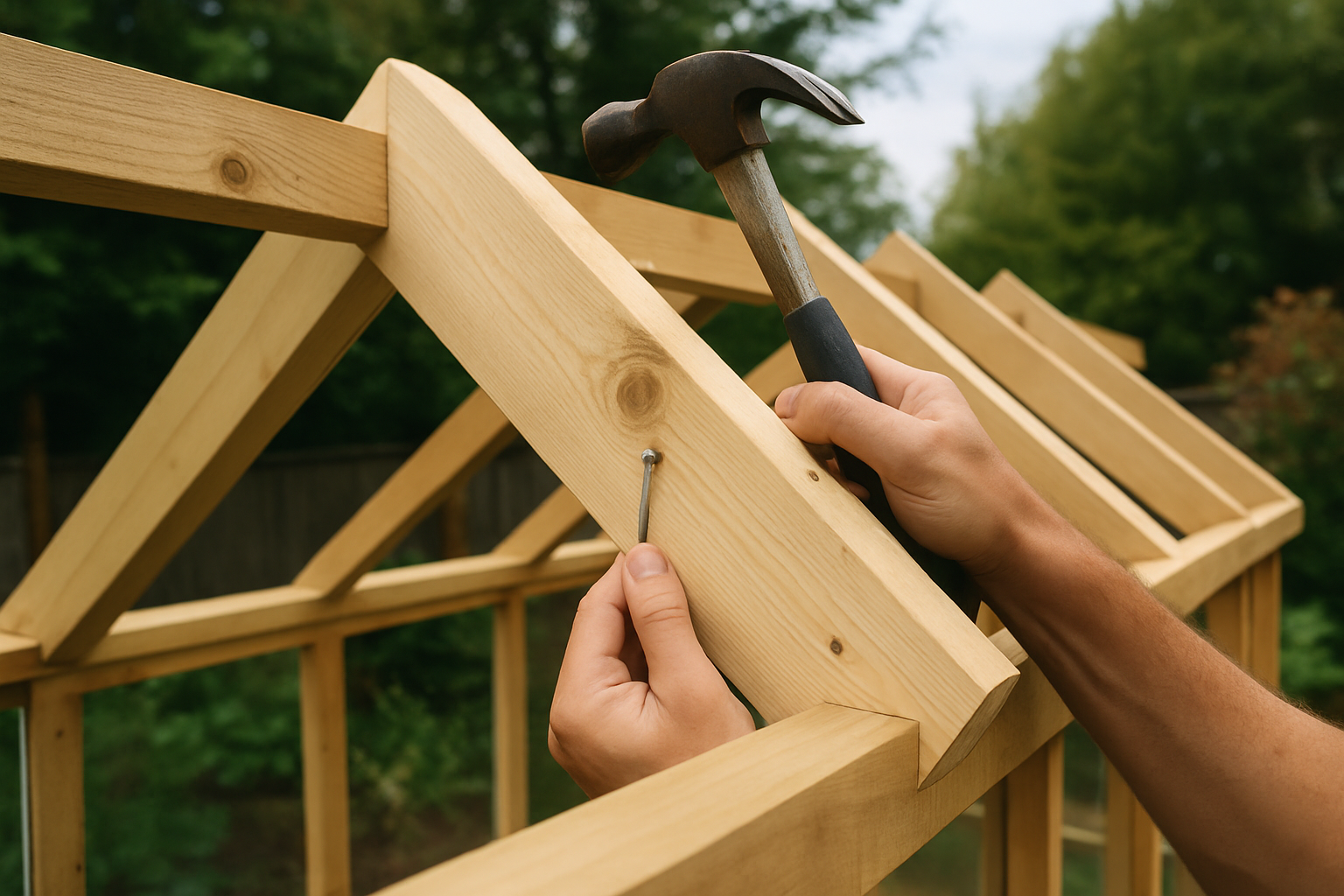
Rafter work doesn’t end when the last spike goes in. The same issue Basa Pete points out in the video—wood splitting around fasteners—can show up later if moisture cycling, wind movement, or seasonal loading stresses the frame. Around 05:00–06:20, the creator repeatedly stresses pre-drilling, and that advice carries forward into maintenance. Every 6 months, inspect birdsmouths, ridge connections, end rafters, and any place where screws or spikes enter near knots or grain runout.
Loose fasteners, tiny cracks, and lifted seat cuts are easier to fix early than after glazing goes on. Industry maintenance estimates suggest that routine visual checks and re-tightening can reduce longer-term structural failures by as much as 60% over a 5-year period, especially in high-moisture outbuildings. That makes greenhouse maintenance a structural issue, not just a gardening one.
- If a rafter shifts after sheathing: loosen one side, re-seat the birdsmouth, then re-fasten with pre-drilled screws.
- If splitting appears: remove the fastener, reinforce with a sister block or filler as needed, then re-drill.
- If snow load becomes a concern: add temporary purlins or cross-bracing using the same blocking logic shown at 06:30–07:00.
- If condensation causes staining: improve venting and inspect sealants before decay sets in.
Before you add glazing, greenhouse electrical system components, or irrigation overhead, wear eye and respiratory protection while cutting, use stable ladders, and verify local code requirements for structural loads and safety glazing. The video demonstrates smart field habits; your job is to keep applying them after the roof is complete.
Conclusion — Build the roof once, use it for years
The smartest lesson from this Basa Pete build is that a strong roof comes from a repeatable process, not fancy tools. The creator explains the measurement logic clearly: center the building, use the/12 relationship to find ridge height, cut one accurate rafter, and let that template control the rest. As demonstrated in the video, the critical numbers—26.5° saw angle, 2.5-inch notch, 90-inch rafter, and 16-inch spacing—create a practical roof frame for a durable garden shed greenhouse.
From there, your next decisions shape how useful the building becomes. Choose greenhouse materials that match your climate and load limits. Add blocking where future shelves, vents, lights, or reclaimed windows need support. Plan greenhouse ventilation, irrigation, and electrical before the roof skin closes everything in. If you’re building in 2026, that extra planning is what separates a simple shed frame from a productive, efficient backyard greenhouse.
Your best next step is straightforward: watch the original video once for the visual sequence, then bring this article to the jobsite as your written checklist. Measure carefully, fit a template, pre-drill where the wood is vulnerable, and keep every centerline honest. Do that, and the rest of the greenhouse build gets a lot easier.
Frequently Asked Questions
How do you calculate rafter height and length for a/12 greenhouse roof?
Use the same geometry Basa Pete demonstrates in the video: measure the full span, divide it in half for the run, then multiply by the pitch rise ratio. On a/12 roof, the rise is half the run, which is why the creator gets roughly 30-plus inches for ridge height at 00:00–00:40. If you want a quick check, run your numbers through a rafter calculator such as Blocklayer.
What rafter spacing should you use for a small greenhouse?
For this build, the video shows rafters laid out at inches on-center, which is a common spacing for a small greenhouse under moderate wind and snow loads. If you plan to use heavier greenhouse materials like reclaimed windows or glass, tighter spacing or larger rafters may be smarter depending on local conditions.
Can you use reclaimed windows on a garden shed greenhouse roof?
Yes, but only if you account for the added weight and fastening details. Reclaimed windows often need stronger blocking, glazing stops, better sealing, and sometimes tempered replacement panes to meet current safety expectations in 2026.
Do you really need to pre-drill rafters and toenail locations?
Yes. The creator explains and demonstrates pre-drilling around 05:00–06:20 because rough lumber and hem-lock fasteners can split the wood during toenailing. Pre-drilling is especially useful near knots, end grain, and birdsmouth cuts where the lumber is already weakened by material removal.
How do you ventilate a greenhouse roof at the ridge?
You can add a continuous passive ridge vent, gable vents, or powered exhaust fans tied to a thermostat. Because the ridge plank is centered and elevated early in the framing process, the roof layout shown in the video makes future greenhouse ventilation upgrades fairly straightforward.
Key Takeaways
- For a/12 roof, Basa Pete’s method is simple: measure half the span and divide by two to estimate ridge height; in the video, that gives roughly 30-plus inches.
- Copy the actual build settings shown in the video: 26.5° saw bevel, 2.5-inch birdsmouth notch, 90-inch rafter length with overhang, and 16-inch on-center spacing.
- Cut one rafter, test-fit it, and use it as a template for the rest; this improves consistency and saves major layout time.
- Pre-drill rough lumber before toenailing or screwing, especially near notches and knots, to avoid splitting and long-term weakness.
- Plan your greenhouse systems early: rafters and blocking should support ventilation, lighting, irrigation, shelving, and reclaimed glazing choices.